October 2026 observations
When concepts are easy to create, the real test returns to the worksite
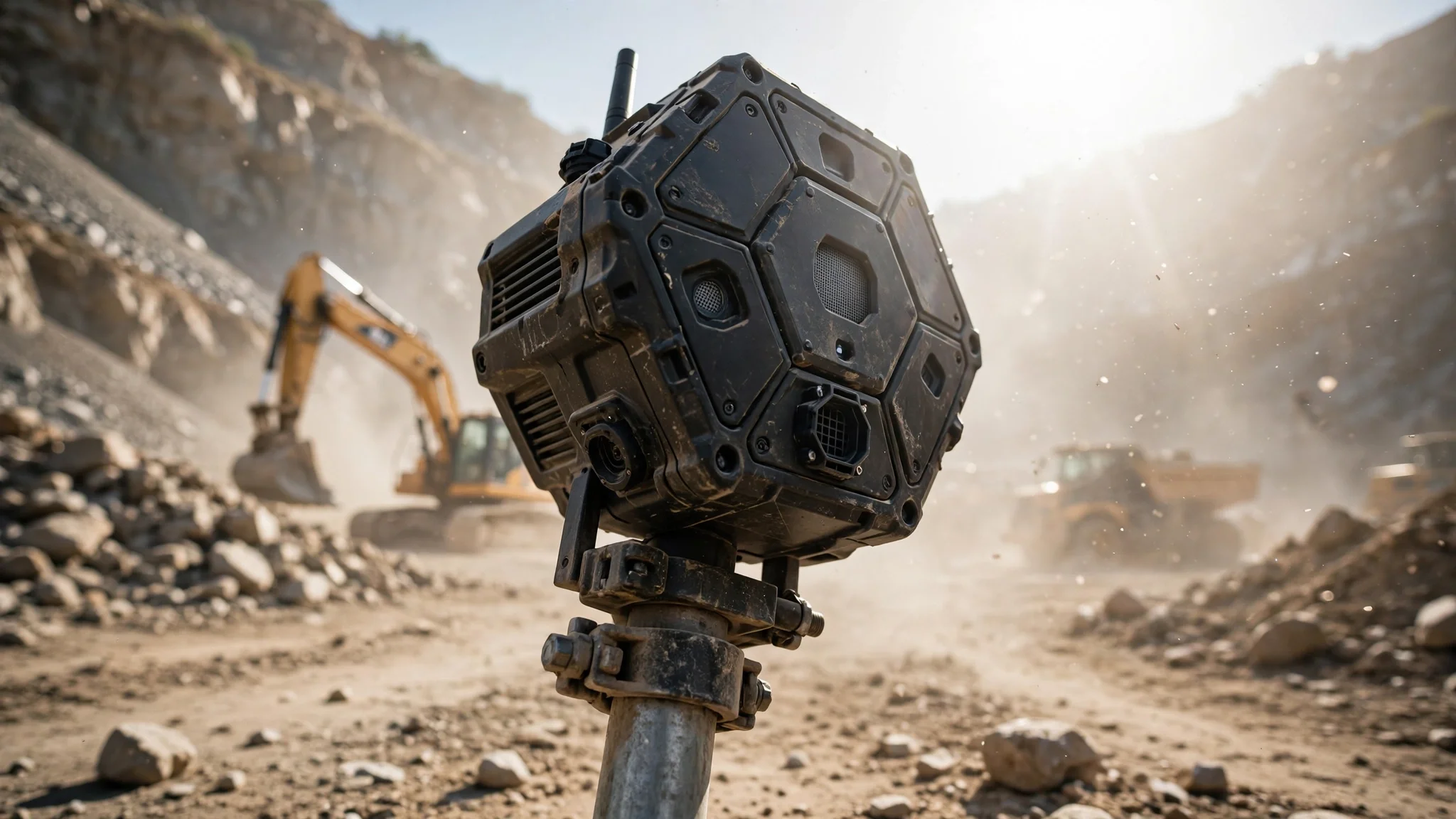
In October 2026, industrial design spans two intertwined worlds. Generative AI tools such as Grok Imagine produce polished product concepts in milliseconds. Meanwhile, the 2026 Good Design Award for Best in Class in the Commercial and Industrial category goes to SiteHive Hexanode, an industrial environmental monitoring system. Its hexagonal modules integrate acoustic, dust and vibration sensors for extended deployment in dusty, sun-exposed, high-vibration construction and mining environments.
At the same time, a design language associated with Teenage Engineering, featuring mechanical deconstruction, exposed fasteners and direct physical tactility, continues to gain attention. The easier it becomes to create concepts on screen, the more evident the manufacturing barriers and demanding conditions of the physical world become. Any structural defect can turn into recalls and returns after exposure to weather, mud and hundreds of thousands of operating cycles.
IDING DESIGN has spent 19 years working with B2B industrial equipment, precision medical instruments and premium hardware. This article examines industrial reliability, the manufacturing traps behind deconstructed aesthetics and engineering in the AI era, showing how transparent engineering throughout the development process helps get products right.
The sealing challenge
Sensors need air; the device needs waterproofing
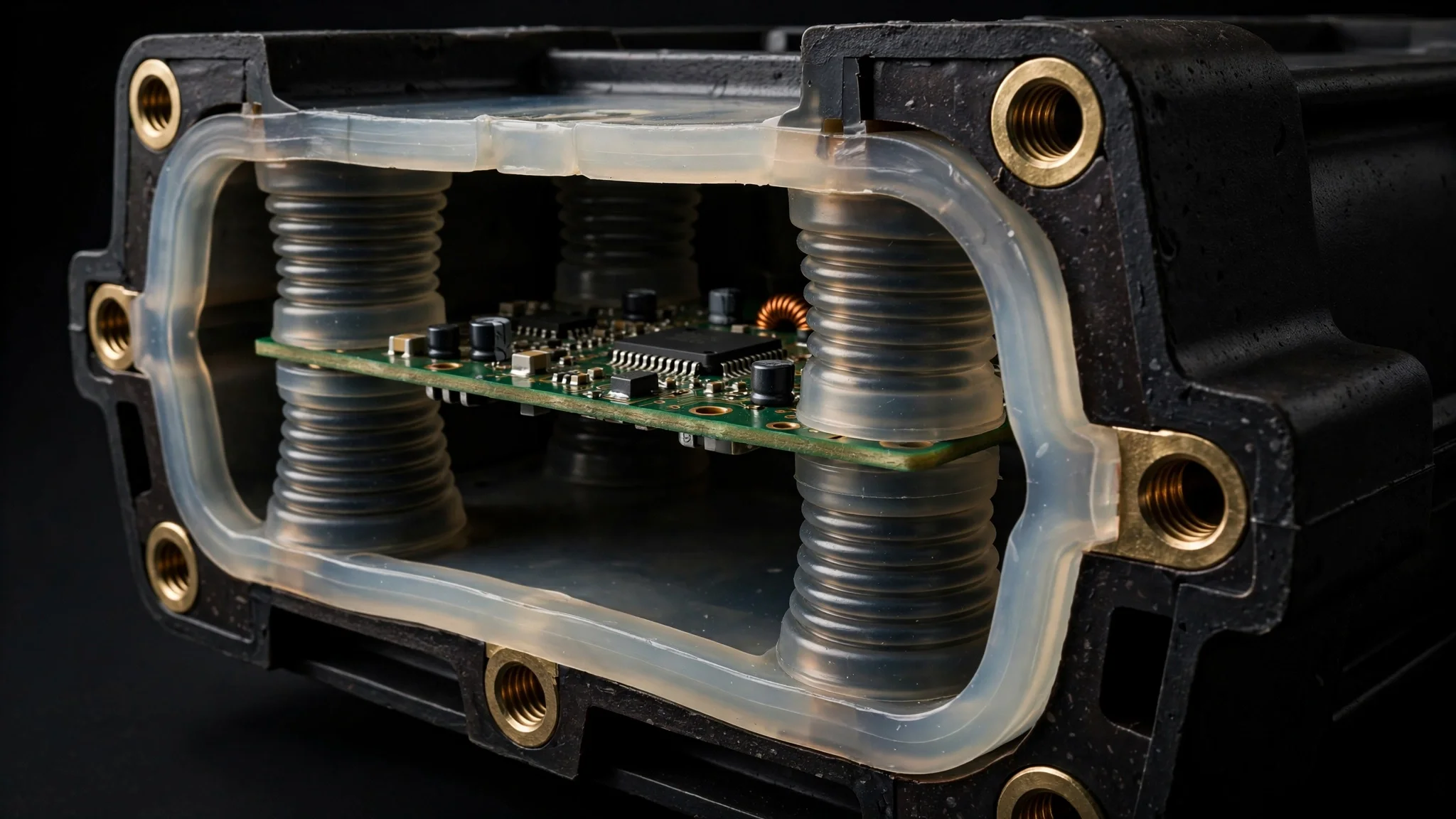
The conflict is specific: microphones need undistorted sound waves, and dust sensors rely on miniature fans to draw in air. Yet moisture and fine sand can short-circuit boards and destroy optical lenses. For compartments requiring long-term waterproofing, we do not rely on adhesive seals alone, because the adhesive can fail after thermal cycling and aging.
At the 3D solid-modeling stage, we establish a physically isolated, dual-chamber architecture. The main electrical compartment uses two-shot molded liquid silicone for a watertight seal. The sensor chamber uses custom labyrinth drainage channels and microporous membranes, designed for IP67 conditions of 1 meter immersion for 30 minutes while maintaining airflow and acoustic fidelity.
Vibration resistance
Under vibration testing, screws are the first to work loose
Many teams carry plastic snap fits and small self-tapping screws from consumer electronics straight into industrial equipment. In a 10-500 Hz swept-frequency vibration test, snap fits can fail from fatigue within hours while screws gradually back out. A product that leaves the factory intact can fall apart after three months on site.
IDING DESIGN replaces self-tapping screws at critical load points with heat-set or ultrasonically embedded brass inserts, with an outside diameter proportioned at 2.0 times the base wall thickness. Core circuit boards are flexibly suspended on high-damping, Shore 40A silicone bushings to reduce high-frequency resonance.

Galvanic corrosion
A stainless-steel screw in aluminum can become a corrosion hotspot
Aluminum's standard electrode potential is around -1.66 V, compared with approximately -0.1 V for stainless steel, creating a substantial potential difference. In humid, salt-laden outdoor conditions, the aluminum acts as the anode and undergoes electrochemical corrosion. White powdery corrosion and pitting appear around the screw hole, gradually weakening the joint.
IDING DESIGN records mandatory corrosion controls in the CMF specification and material schedule: isolate the interface with insulating anodized washers, or use Dacromet-coated fasteners consistently to interrupt the electrochemical corrosion path at its source.
Tolerance stacks
A knob's feel is built one micron at a time
The stepped, damped feel of a mechanical knob is central to deconstructed aesthetics, yet presents a demanding tolerance-stack problem. The handle, potentiometer shaft and enclosure opening contribute at least three tolerances. If their total exceeds +/-0.15 mm, injection-molding batch variation or an ambient temperature of 40 degrees Celsius can cause eccentric movement, scraping, noise or jamming.
IDING DESIGN uses a dual-bearing, self-centering guide structure to hold shaft-system tolerances to +/-0.03 mm. This helps maintain consistent feel and detents across production batches while reducing play and unwanted noise.
Engineering fundamentals
AI can visualize a concept, but cannot calculate its tooling cost
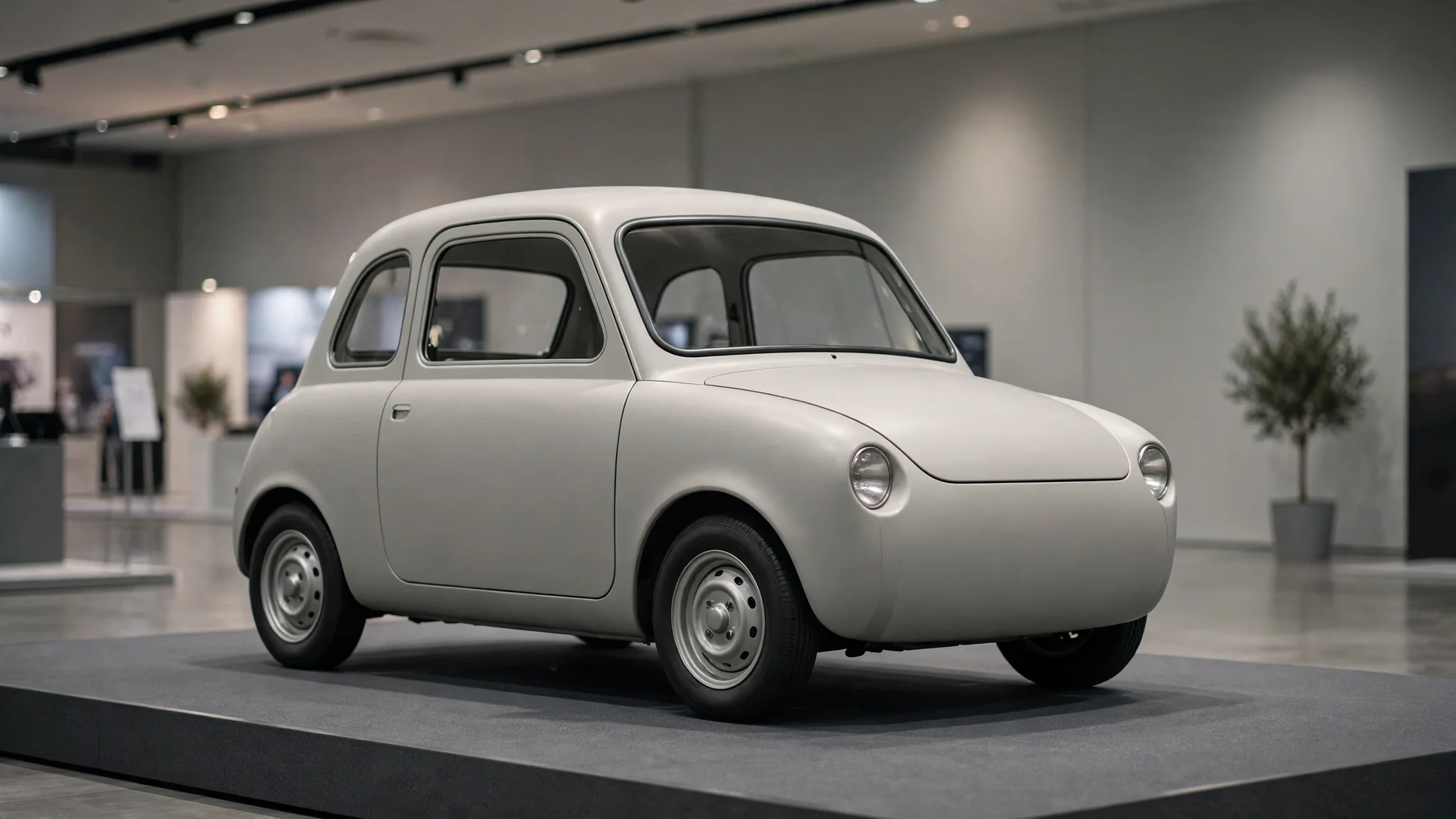
Anyone can now create a polished rendering with generative AI in seconds. But AI cannot offset hundreds of thousands of yuan in sunk injection-tooling costs, calculate plastic-melt shrinkage inside a mold cavity or assume the commercial risk of failure in demanding operating conditions.
For 19 years, IDING DESIGN has focused on one thing: helping you get the product right. Deliverables are production-ready parametric solids, complete with draft angles, uniform wall thicknesses and ribs following the 0.5-0.6T rule to prevent sink marks. They are supported by mold-flow simulation, structural finite-element vibration analysis, closed-loop tolerance-stack calculations and frozen CMF manufacturing specifications.
From real operating-condition inputs and locked component envelopes to 3D STEP solids and 2D GD&T manufacturing drawings ready for tooling, transparent engineering provides checks throughout development. This is how IDING DESIGN helps manufacturers navigate market cycles and sustain their commercial standing.
Frequently asked questions
Four questions about operating reliability and mass production
Key questions about rugged enclosures, deconstructed aesthetics, AI and production drawings.
What is the core mechanical-design conflict in rugged industrial devices?
Sensors need contact with air, while the complete device must remain sealed and waterproof. A proven solution is an isolated dual-chamber architecture: separate the main control electronics from sensing airflow paths, combine labyrinth drainage channels with microporous air- and sound-permeable membranes, and use two-shot molded liquid-silicone gaskets at loaded sealing surfaces, maintaining compression in the 25%-35% range for effective elastic sealing.
Why does hardware that imitates a mechanically deconstructed style often struggle in production?
Three common traps are stainless-steel screws fastened directly into aluminum, causing galvanic corrosion in humid conditions; knobs and buttons designed without tolerance-stack calculations, leading to eccentricity and jamming as temperatures change; and stamped or CNC-machined metal edges left without deburring and chamfering, exposing users to cuts.
Can AI image tools reduce design costs for hardware companies?
They can lower concept-exploration costs: ideation, color boards and marketing-visual tests become faster and cheaper. But AI output lacks physical thickness and assembly logic. It cannot calculate draft angles or rib-related sink marks, nor provide 2D GD&T drawings. Production still requires an engineering team to rebuild the design as CAD solids.
How do IDING DESIGN's production drawings support tooling without rework?
Three requirements apply: deliver 3D STEP/IGES parametric solids with complete feature trees; run mold-flow simulations to identify weld lines and shrinkage voids, plus drop and vibration finite-element analysis before sign-off; and provide 2D production drawings with precise datums and tolerance zones so the mold maker can proceed without further drawing revisions.
Get your next product right
Developing industrial hardware, or facing sealing, vibration or production-yield problems? Talk to us. With 19 years of production engineering experience, IDING DESIGN helps get your drawings right the first time.