The Fall of the All-Touchscreen Myth
Polestar Brings Back Physical Buttons, Europe Writes Blind Operation Into the Rules
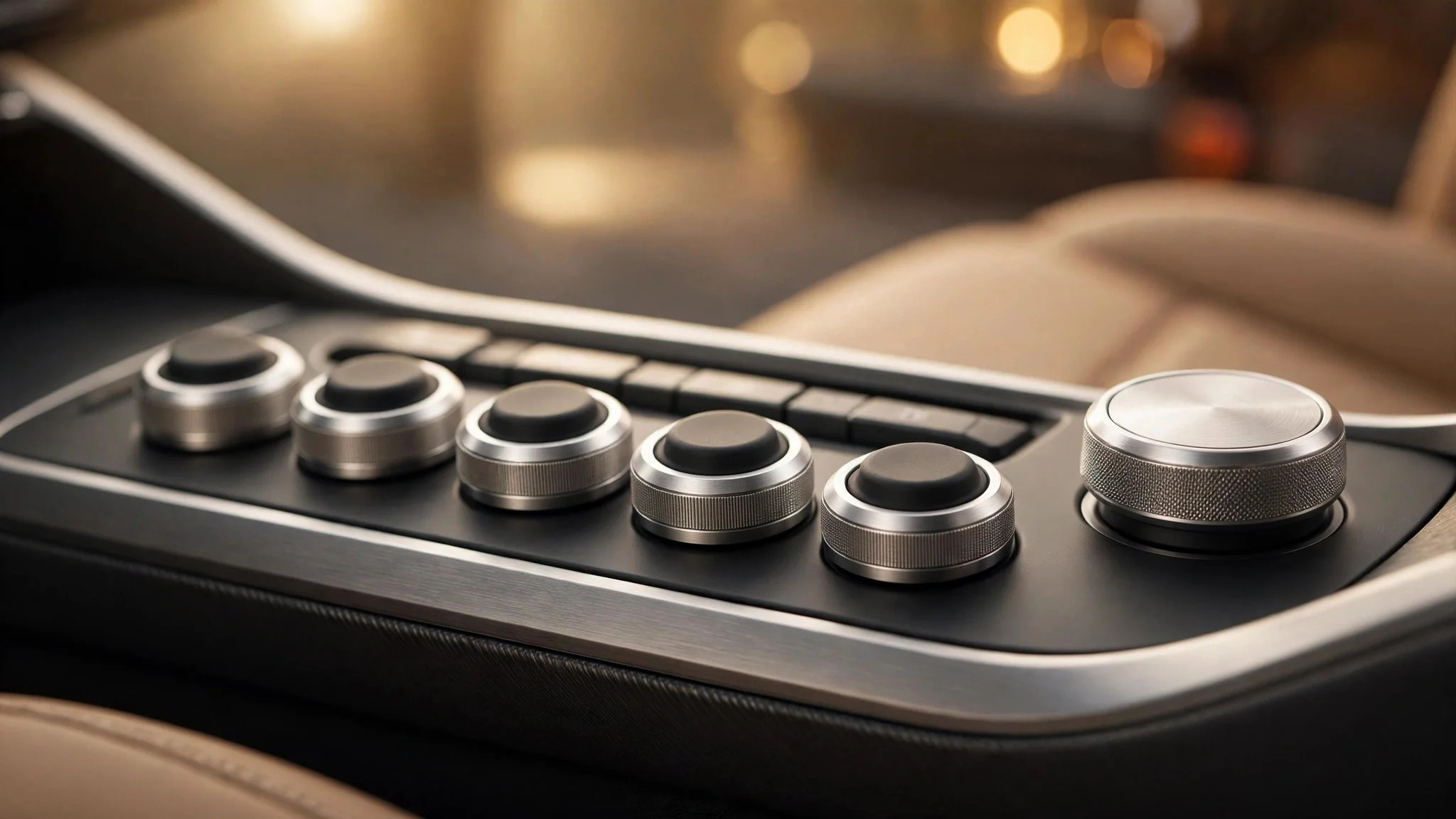
In mid-November 2026, industrial design hit a landmark turning point: Polestar unveiled its flagship concept car, the Formula 2030, in Gothenburg — and the centre console proudly brought back eight large modular physical mechanical buttons and a rotary damping controller. Polestar confirmed that physical buttons will return as a core interaction asset in its next production models.
At almost the same moment, the Euro NCAP 2026 safety rules took full effect: to earn the top five-star rating, a new car must fit independent, blind-operable physical buttons or stalks for five core controls — indicators, hazard lights, wipers, horn and SOS emergency call. Volkswagen, Audi, Volvo and other mainstream carmakers have likewise confirmed they are leaving the “one big tablet runs everything” era behind.
The comeback is crossing quickly into wider manufacturing: heavy-equipment consoles, minimally invasive surgical devices, professional audio and consumer hardware are all shifting from “pure touchscreen faith” to a hybrid human-machine interface architecture. IDING DESIGN, with 19 years of industrial design and precision mechatronics production experience, unpacks the tactile science, tolerance battles and engineering delivery loop behind this return.
The Victory of Tactile Physics
Blind Operation in 0.2 Seconds vs. 22 Seconds of Menu Hunting: Where Touch Wins
For a decade, “one big screen kills every button” was treated as the definition of high-tech. In reality it was often a cost compromise — saving mould tooling and wiring-assembly hours. Flat capacitive glass strips away the tactile feedback channel: finding a function means looking away to hunt through menus, taking 5–22 seconds per action. At 120 km/h, three seconds of diverted gaze is tens of metres of blind driving.
A physical switch uses three-dimensional geometry — raised edges, shallow recesses, knurled rollers, stepped rims — so fingers can locate it by proprioception and muscle memory. The force snap and “click” confirm success to the motor cortex in under 0.05 seconds, with zero cognitive load: blind operation takes just 0.2 seconds and safety response improves by 90%.
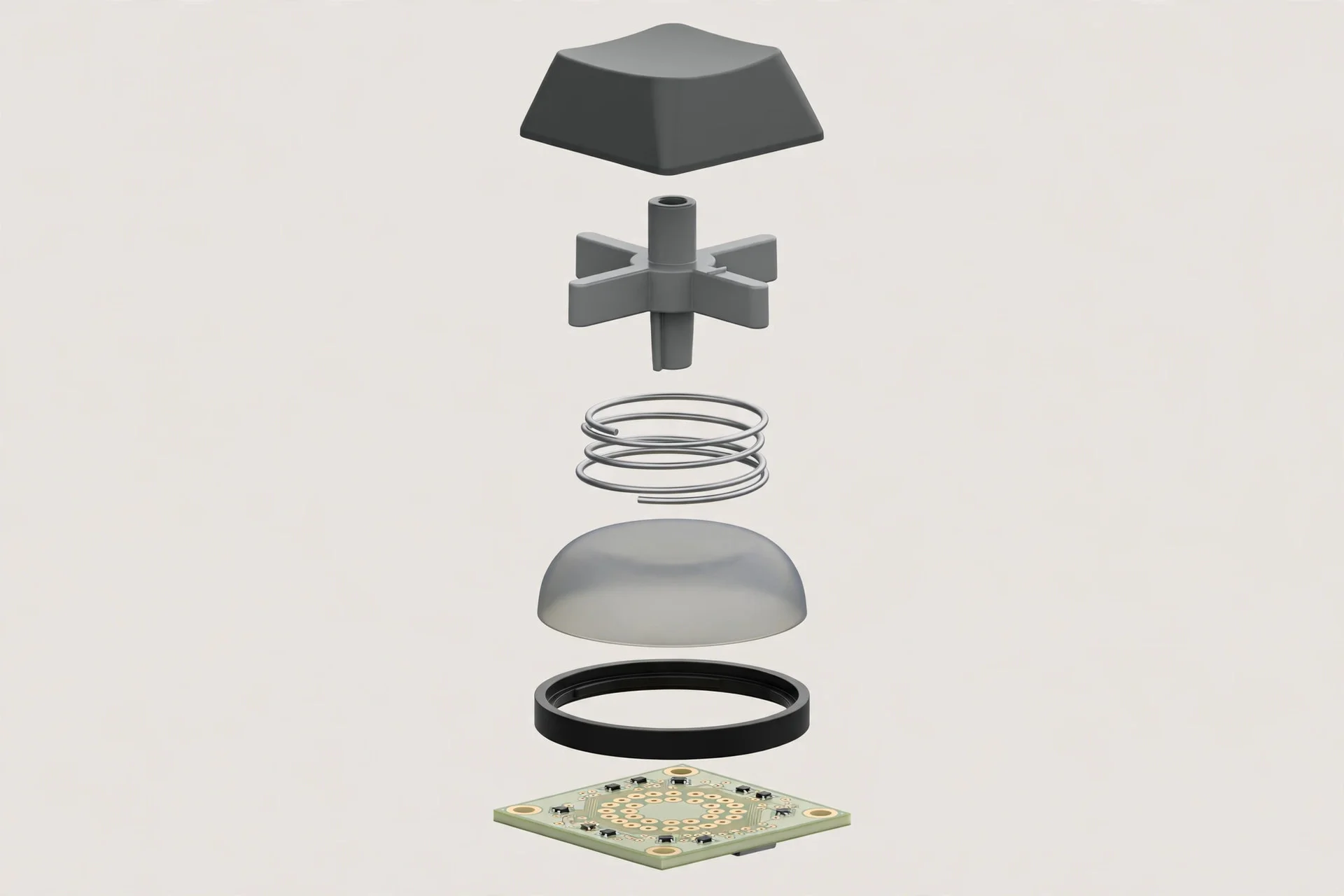
Dynamic Sealing and Backlit CMF
Sealing and Backlight: 0.15mm of Preload Seals Off Light Leakage
In medical devices, outdoor equipment and vehicles, button gaps are natural entry points for liquid and dust. IDING rejects the crude double-sided-tape-and-sponge approach and instead uses two-shot LSR sealing membranes or standalone silicone dome arrays as the first line of defence, isolating mechanical travel from the electronics bay with 100% water- and air-tight separation that survives medical-grade alcohol and harsh salt spray, meeting IP65/IP67.
Backlighting has hard numbers too: a high-opacity black ABS light shroud between PCB and translucent keycap, preloaded 0.15mm against the keycap's inner wall to seal off side leakage; translucent PC core with black overmould, fibre-laser engraved characters and a wear-resistant UV-cured hard coat that passes 300+ RCA abrasion cycles without showing white.
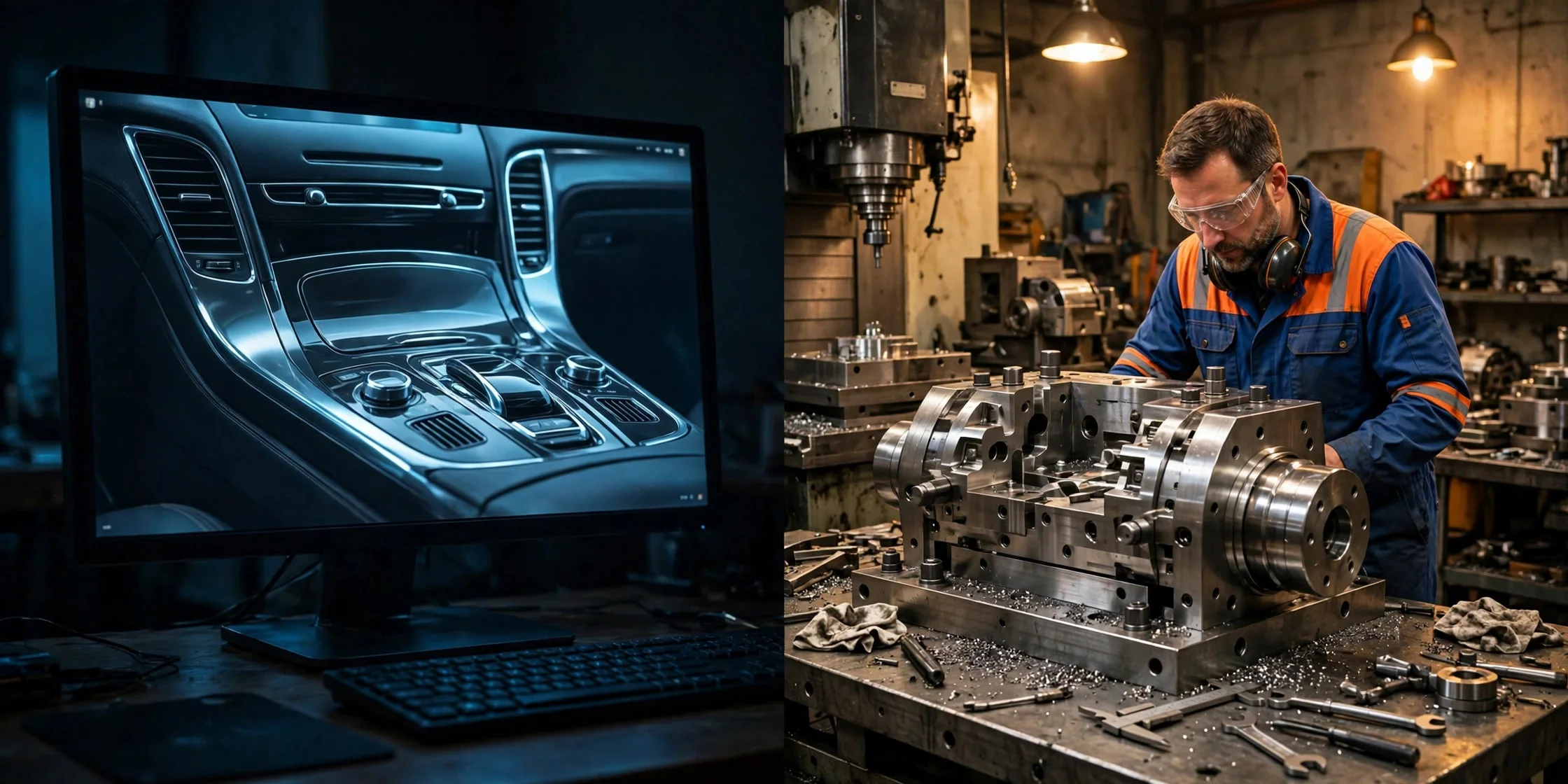
Getting the Product Right
What Returns Is Not the Button — It Is Tactile Certainty
The return of physical buttons is not nostalgia — it is the industry re-pricing “tactile certainty”. Blind-operation safety, muscle memory and 0.2-second confirmation are engineering values no sheet of glass can deliver. Compute snap ratio, guide gaps, sealing and backlighting into the drawings first, and a button stops being decoration in a render and becomes a production part that survives 100,000 presses and the scrutiny of the assembly line.
FAQ
FAQs on the Return of Physical Buttons
Four questions most often asked about the return of physical buttons, mass-production failures, hybrid HMI and production drawing delivery.
Why are cars and industrial/medical equipment collectively abandoning pure touchscreens and returning to physical buttons?
The root cause is the ergonomic and safety defects of pure capacitive touchscreens: with no tactile feedback, drivers must look away from their main task to hunt through menus, which is why Euro NCAP 2026 mandates physical keys for core functions. Physical buttons use three-dimensional contours and muscle memory to confirm blind operation in 0.2 seconds, and stay reliable with gloves, wet hands or strong vibration — conditions where touchscreens fail or mis-trigger.
What are the most common mass-production failures in precision button design and moulding, and how are they solved?
The most common mass-production failures are off-centre jamming, loose wobbly feel and character light leakage. The fixes: four-corner anti-rocking cross guide ribs with a 0.18–0.22mm sliding gap and high-lubricity POM guide sleeves decoupled from the housing; snap ratio tuned to 40%–55% with actuation force locked at 1.8N–2.5N; and an independent high-opacity ABS light shroud between PCB and keycap, preloaded 0.15mm to seal off side leakage.
How does the “Hybrid HMI Architecture” promoted in modern hardware design divide the boundary between software and hardware?
Hybrid HMI follows the principle of decoupling by urgency and frequency: touchscreens handle non-urgent, low-frequency, complex information browsing and settings navigation — maps, system configuration, equipment health monitoring. Physical mechanical keys and knobs carry high-frequency, time-critical, safety-related hard operations — emergency stop, wipers, climate control, surgical power adjustment — guaranteeing zero-delay blind operation.
How do IDING DESIGN's “production drawings” guarantee zero mould rework for physical buttons and mechanisms?
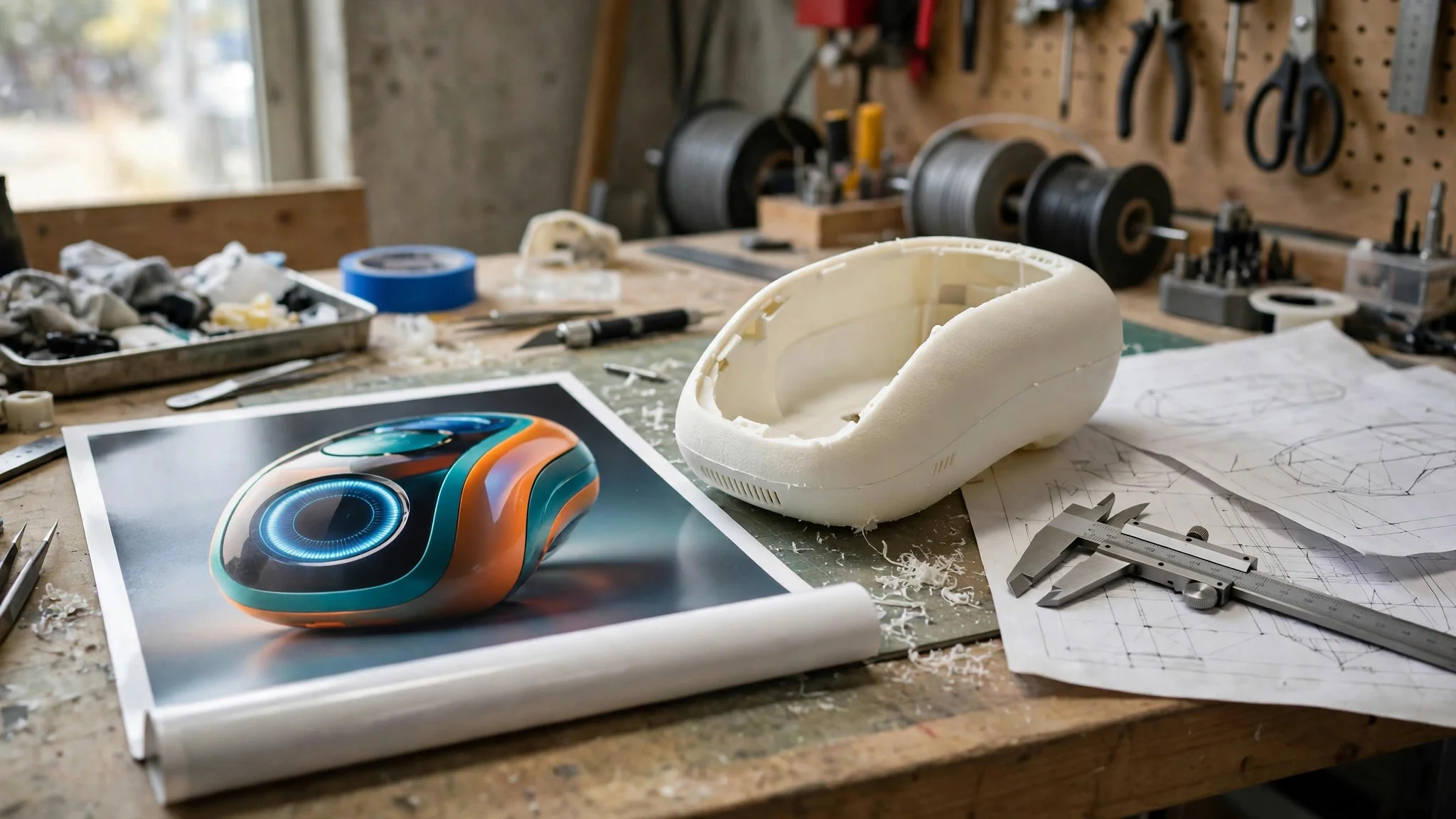
IDING DESIGN applies a full engineering white-box discipline: every moving part is modelled as a parametric 3D STEP/IGES solid with a complete feature tree — never a thickness-less mesh; before sign-off, 3D tolerance stack-ups are computed to verify thermal-expansion gaps and mould-flow draft angles; and 2D manufacturing drawings with strict GD&T plus a CMF specification book are delivered, so the mould shop can cut steel directly with no re-drawing.
Buttons Without a Premium Feel? Compute It at the Drawing Stage
Struggling with jamming buttons, loose feel, backlight leakage or trial-production rework? IDING DESIGN can move tactile engineering and tolerance problems upstream to the drawing stage — 19 years of industrial design and engineering delivery experience, solving them before they happen.