Author
Author: Luo Wanlan | Founder/Design Director of IDING DESIGN, one of the Top Ten Industrial Designers in Sichuan-Chongqing, …
Author: Luo Wanlan | Founder/Design Director of IDING DESIGN, one of the Top Ten Industrial Designers in Sichuan-Chongqing, 20 years of industrial design experience
The Three "Hard Constraints" of Medical Device Design
The Three "Hard Constraints" of Medical Device Design
The biggest difference between medical device design and consumer electronics is that it faces three constraint systems at the same time, and none of the three can be neglected. The ability to understand this constraint system is the true dividing line for a medical product design company.
First, regulatory compliance. From the GB 9706 series of medical electrical safety standards to the CMDE's Guiding Principles for Registration Review of Human Factors Design for Medical Devices (2025 Draft for Comment)—every step in medical device design is not free-form creation, but a search for the optimal solution within a regulatory grid. The design team needs to understand from the outset the device classification level, applicable standards, and the requirements that the registration pathway places on design documentation.
Second, clinical use scenarios. Operating rooms, ICUs, emergency departments—these environments do not require equipment to be "good-looking"; they require it not to fail. Minimizing operating errors, compatibility with disinfection workflows, and spatial arrangement when multiple devices coexist—these constraints come from the tacit knowledge that clinical operators accumulate day after day, and they are not in any requirements document.
Third, ergonomics. The grip angle of handheld instruments, fatigue curves during prolonged operation, and the fit range for users of different body types—human factors in medical devices is not just about "comfortable grip"; it directly affects surgical precision and the occupational health of medical staff.
Core Logic
Core Logic: Problem Definition Determines Solution Quality
The intersection of the three constraint systems is the real battlefield of medical device industrial design. This intersection has one core task: before starting design work, clearly define the problem that actually needs to be solved.
Take minimally invasive surgical instruments as an example. The design team needs to understand not "what kind of forceps the client wants," but "when closing multiple vessels at once, what the doctor's left hand is doing, what the right hand is doing, where the gaze rests, and which joint shows fatigue first." If these questions are not answered, any form proposal is a castle in the air.
Multi-Fire Clip Applier—Structural Innovation Driven by Operating Efficiency
Multi-Fire Clip Applier—Structural Innovation Driven by Operating Efficiency
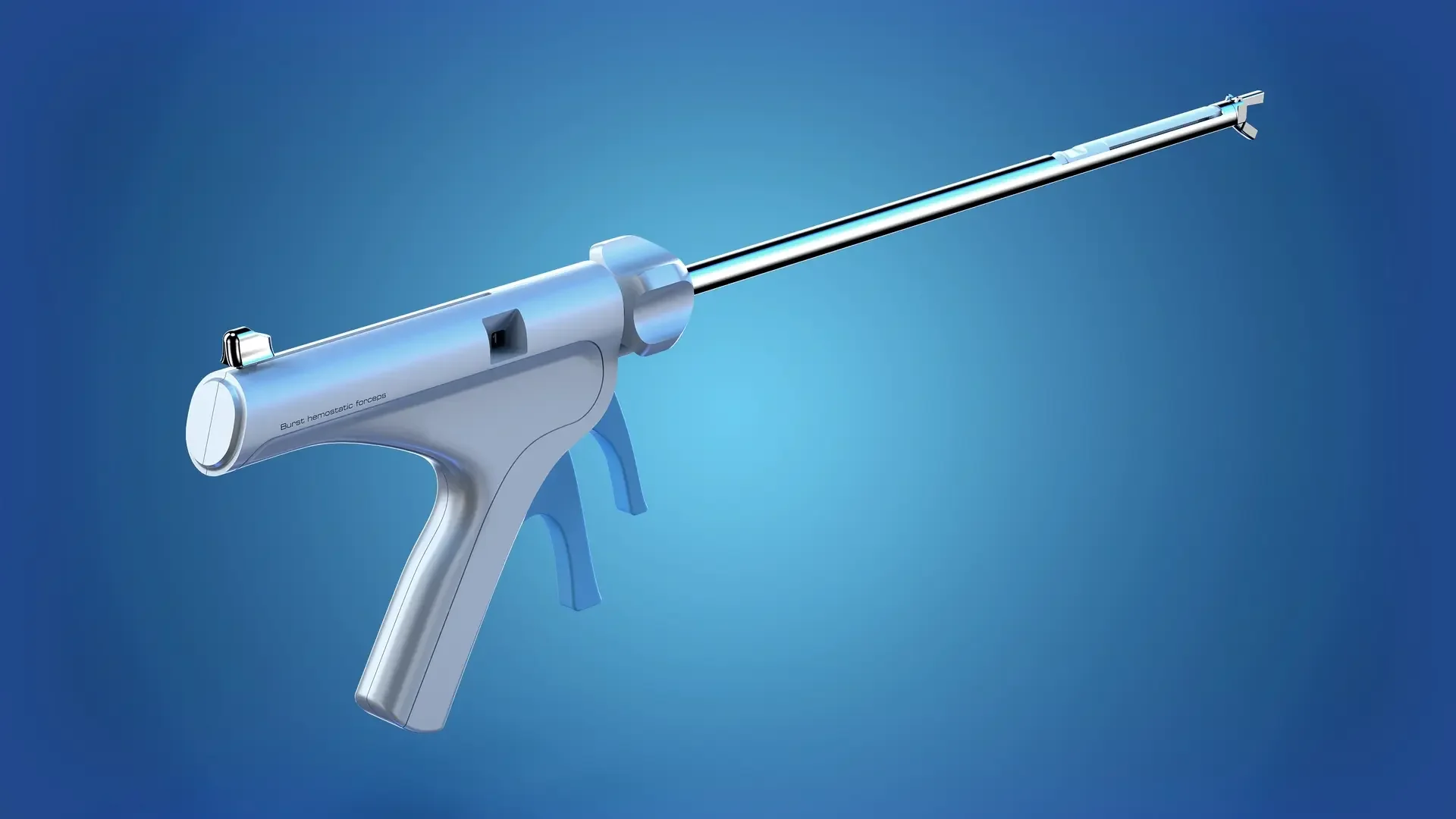
The multi-fire clip applier designed by IDING DESIGN for Shengshi Technology is a Gold Award winner in the Equipment Manufacturing category of the Tianfu Baodao Industrial Design Competition. The product's core purpose is to solve an efficiency bottleneck in minimally invasive surgery: traditional single-fire clip appliers need to be reloaded after each vessel is closed, and the repeated interruptions not only slow the surgical rhythm but also increase the risk of patient infection.
IDING DESIGN's approach did not start from form, but from analysis of the surgical workflow. By studying the sequence of a doctor's actions during laparoscopic surgery, the team took "single load, multiple continuous uses" as the core structural logic and redesigned the firing mechanism and the clip magazine feed path. The final product allows doctors to continuously close multiple luminal tissues without interrupting the procedure, directly improving surgical efficiency and reducing patient infection risk and the workload of medical staff. The compactness of the form and the grip curve of the handle are natural outcomes of the structural logic, not added decoration.
Positive Pressure Air-Supplied Respiratory Protection System—Compliance-Driven Form Design
Positive Pressure Air-Supplied Respiratory Protection System—Compliance-Driven Form Design
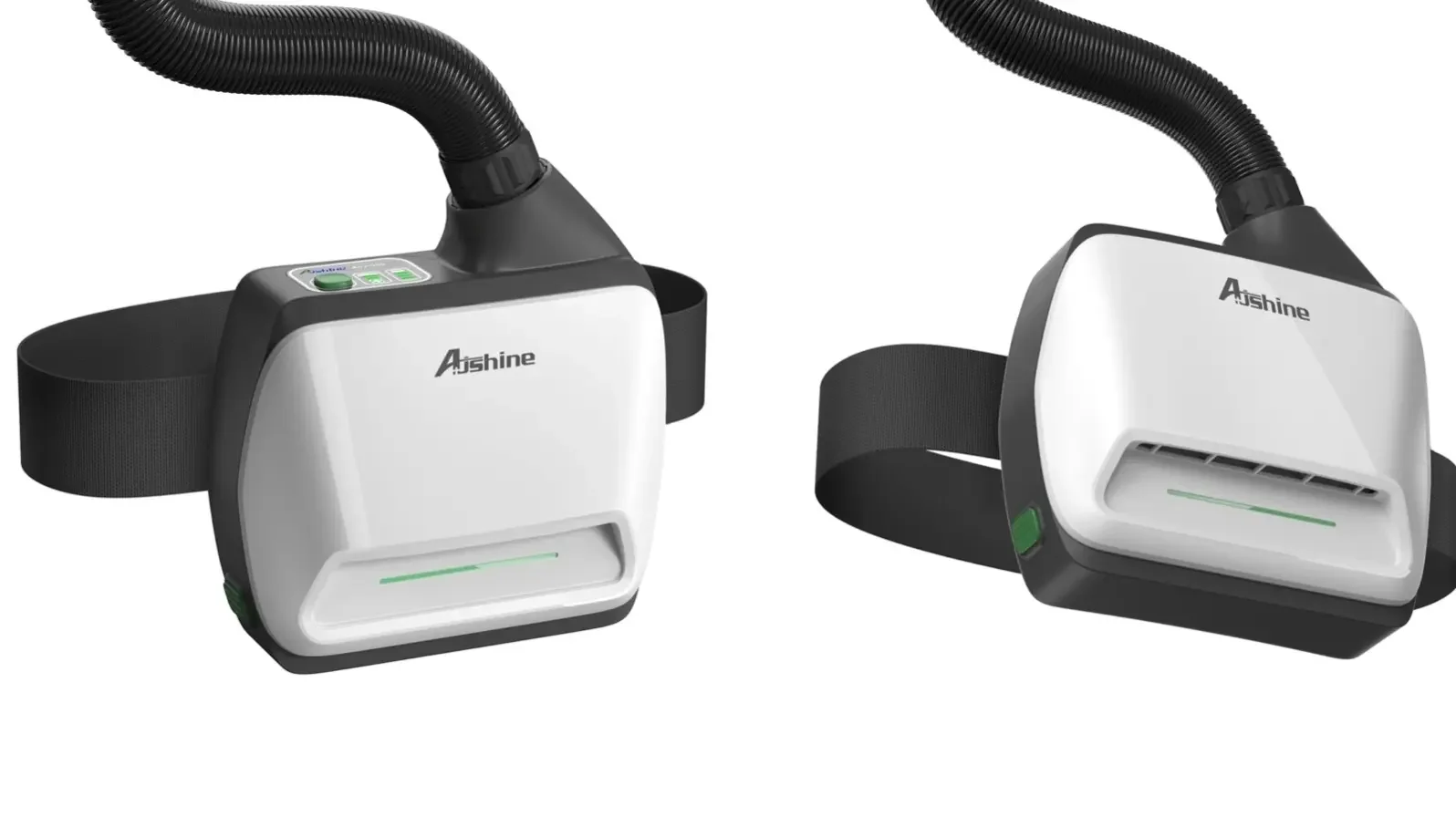
This iF Design Award-winning product draws its exterior inspiration from the hexagon in polymer chemical structures—not an aesthetic choice, but a visual anchor for the industry attribute. The core purpose of the complete curved front surface is to reduce dust accumulation and bacterial adhesion, making cleaning and disinfection easier. The central raised section houses the filter, keeping the body slim; the curved back fits the human waist, meeting ergonomic requirements for prolonged wear. Behind every form decision is a compliance or clinical constraint, and the role of design here is "translation"—translating regulatory requirements and scenario constraints into manufacturable geometric forms.
Ultrasound Postpartum Rehabilitation Therapy Device—Design That Reduces the Distance Between Doctor and Patient
Ultrasound Postpartum Rehabilitation Therapy Device—Design That Reduces the Distance Between Doctor and Patient
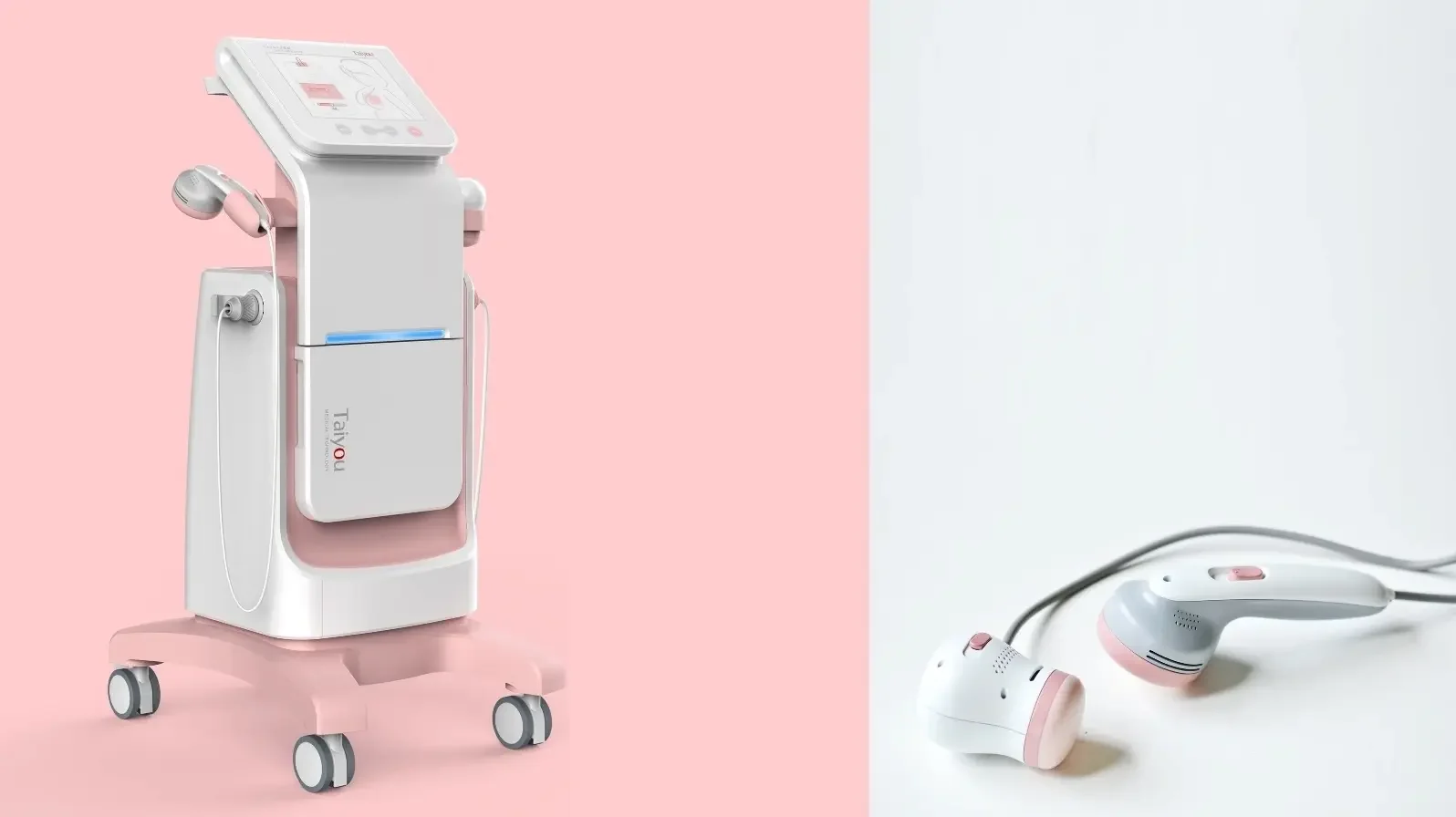
Designed for Taiyou Medical, this product's core innovation lies in the material and form of the treatment head. The self-developed polymer coupling agent filling combined with a one-piece formed PVC membrane achieves flexibility and warmth similar to human skin. The finely crafted uterine involution gun and "hamburger"-style lactation promotion gun allow treatment to take place in a comfortable atmosphere, reducing the doctor's labor intensity and also reducing the patient's tension when facing cold medical devices.
Industry Perspective
Industry Perspective
Over the next three years, the dividing line in medical device design will be depth of clinical understanding. With the implementation of CMDE's Guiding Principles for Human Factors Design in Medical Device Registration Review (2025 Draft for Comment), human factors engineering analysis in design documentation will move from optional to mandatory. This means design teams without clinical research capabilities will be eliminated.
At the same time, medical devices are undergoing a de-hospitalization trend. More and more devices are moving from hospitals to out-of-hospital settings—home rehabilitation, community care, and wearable monitoring. This requires design teams to understand not only clinical practice but also the UX logic of home scenarios. The intersection of these two capability lines is the core competitive advantage of medical device design firms in the next stage.
Choosing a Medical Device Design Partner
Choosing a medical device design partner is essentially choosing a kind of "translation capability"—translating clinical…
Choosing a medical device design partner is essentially choosing a kind of "translation capability"—translating clinical language into design language, regulatory requirements into structural solutions, and user pain points into form decisions. Anyone can produce drawings; translation capability is what has value.
View IDING DESIGN's full case library | Book a design assessment