October 2026 Watch
In an Age of Rendering Overload, Realness Has Become Scarce
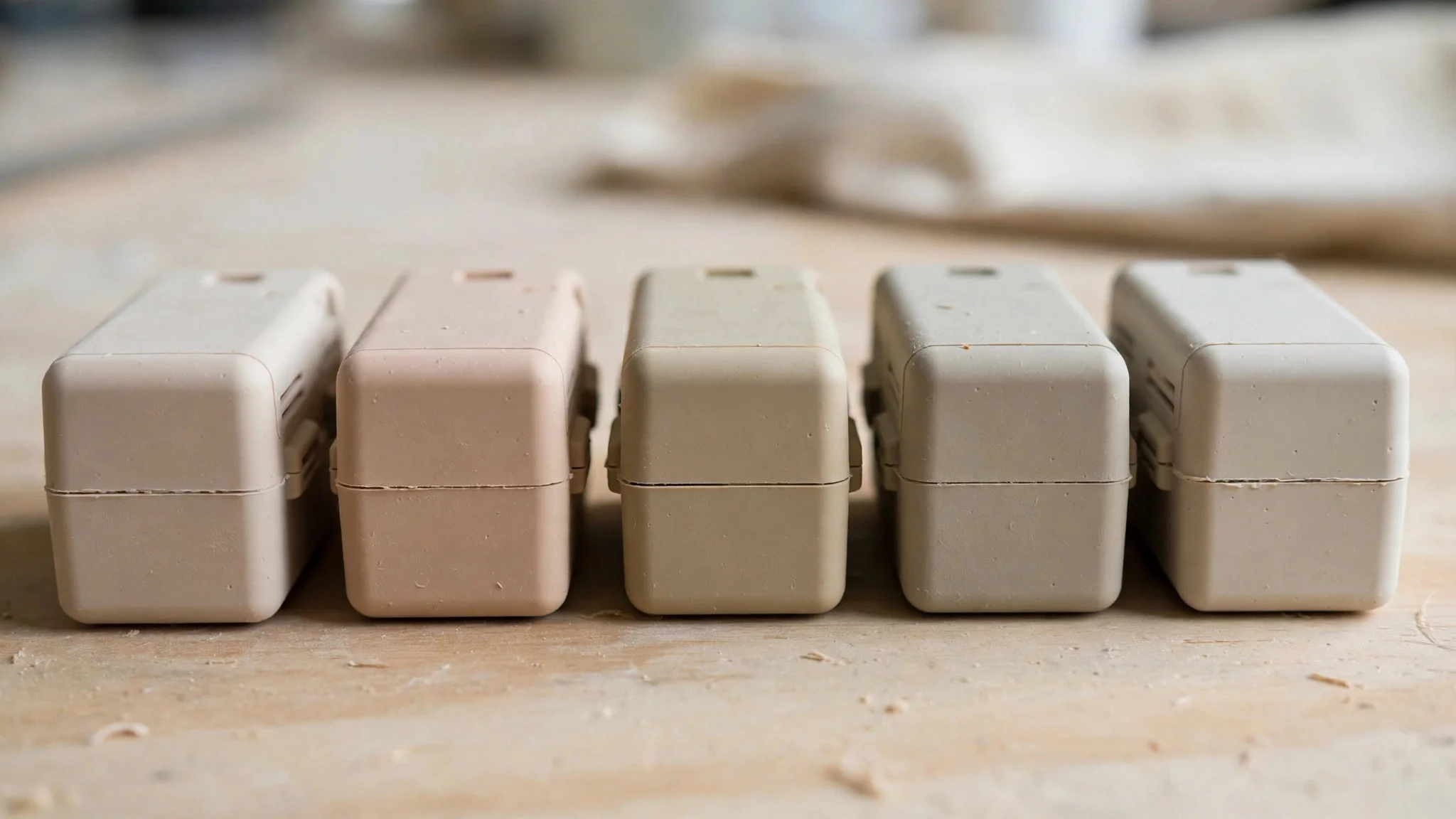
On October 25, 2026, Dutch Design Week closed in Eindhoven. Its theme, Raw, rebel, real, celebrated works built from unadorned native materials, bio-circular substances, and exposed industrial construction — an answer to the hunger for physical authenticity.
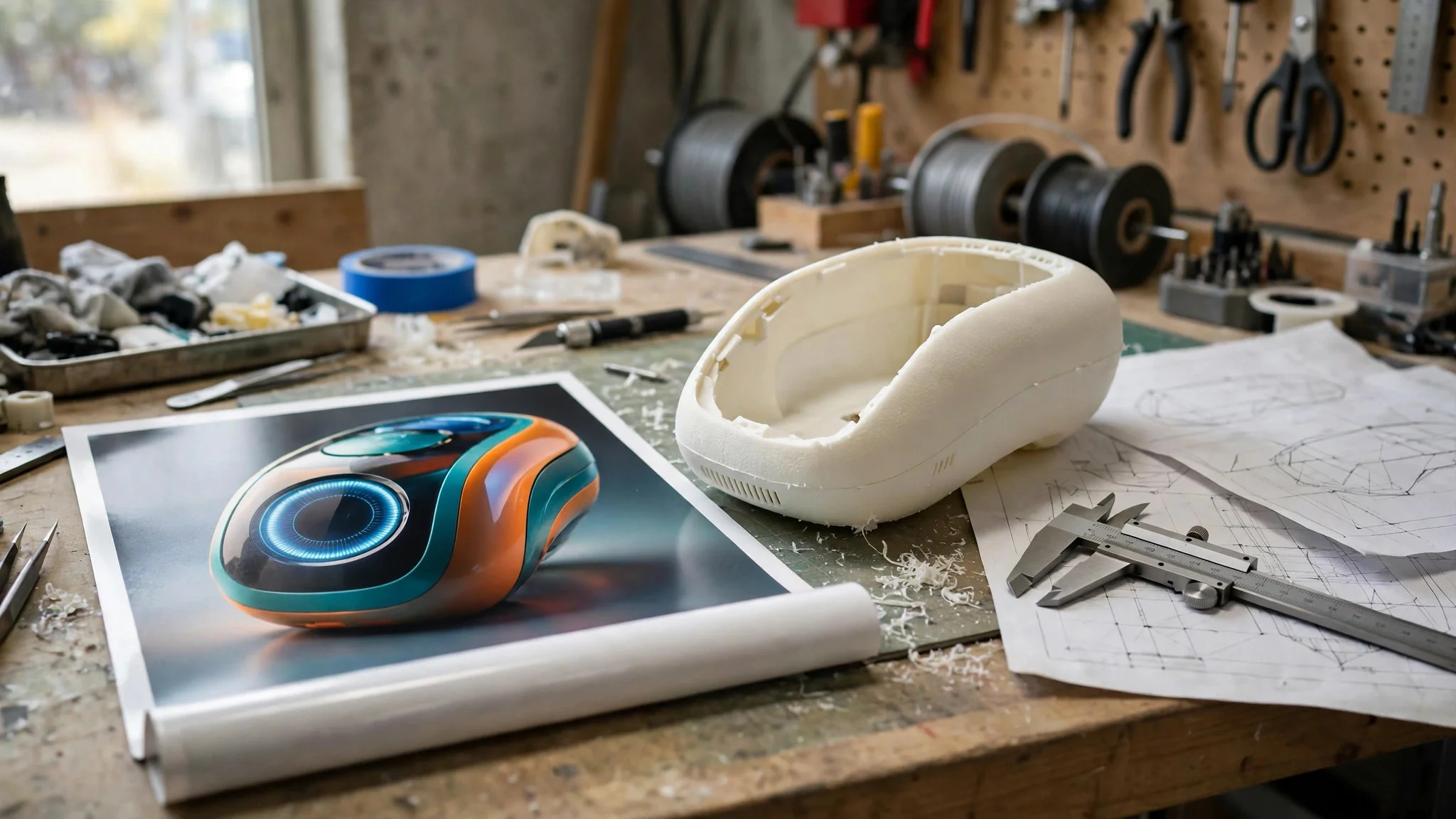
At almost the same moment, the design world was redrawing AI's applicability boundaries: concepts can be generated in seconds, but real products that can be machined, injection-molded, assembled with tight seams, and run reliably for years remain scarce.
AI's Physical Blind Spots
Parting Lines, Wall Thickness, Tolerance Chains: Three Hurdles AI Cannot Clear
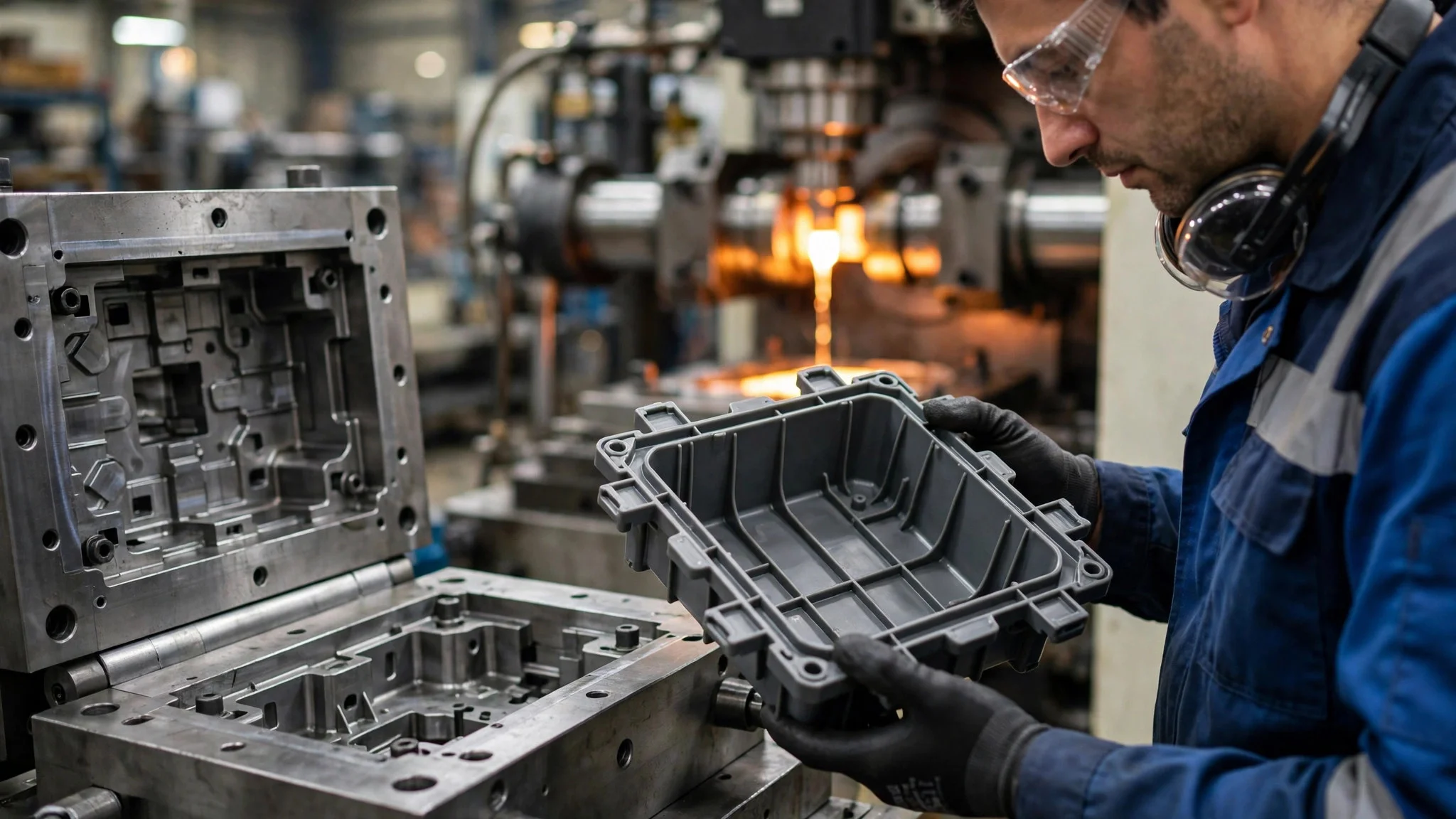
AI-generated surfaces are often full of undercuts and negative angles: molds must open and close along a fixed axis, and an injection-molded part will be torn apart in the cavity the moment it is ejected. Wall thickness is trickier still: ribs must be kept at 0.5–0.6 times the main wall thickness, and thick solid structures will inevitably show sink marks on the cosmetic surface after cooling.
Nor can it define tolerance bands between injection-molded parts, sheet-metal parts, seals, and screws, or compute whether a 0.1 mm tolerance stack-up will make top and bottom shells misalign, rattle, or fatigue-snap their clips.
Design for Repairability
A Product That Can Be Opened and Repaired Is Truly Durable
Disassembly is part of realness too: replace non-removable chemical adhesives with finite-element-analyzed cantilever clips and standardized heat-staked brass inserts. Clip root fillets are controlled at R0.5–R0.8 mm to eliminate injection-molding stress concentration.
This structure must survive more than 20 disassembly and maintenance cycles without plastic fracture — repairable products last longer.
Engineering White-Box
Getting the Product Right: Four Baselines for Drawing Delivery
Manufacturing does not need more flamboyant sci-fi renderings; it needs industrial-grade production drawings that let mold shops go straight to scheduling, assembly workers build smoothly, and quality teams hold yields above 98%. For 19 years, IDING has done one thing: help you get the product right.
Four baselines: deliver 3D STEP/IGES parametric solids with complete feature trees; full coverage of draft angles, uniform wall thickness, and anti-sink rib rules; 2D drawings that strictly define tolerance bands and datum planes; and mold shops able to program cutting directly with no second revision, avoiding hundreds of thousands of yuan in rework costs.
FAQ
FAQs on AI Applicability Boundaries and Production Drawings
Four questions R&D leaders ask most about AI's applicability boundaries, raw CMF, and drawing delivery.
What is AI's core value and applicability boundary across the industrial design process?
AI suits early creative divergence, concept sketch variation, CMF material and color board generation, and intuitive visual communication. But it completely fails at draft angles, injection-molding wall-thickness uniformity and shrinkage control, mold-flow analysis, assembly tolerance stack-up, and 2D GD&T drawing — production requires engineering teams to rebuild parametric solids.
What engineering challenges does Dutch Design Week's raw texture pose in injection molding?
Without paint, weld lines and gas marks have nowhere to hide, and low-gloss matte etching increases demolding resistance and risks drag marks. The answer is upfront mold-flow simulation to steer weld lines to non-cosmetic surfaces, plus the etch-draft compensation rule: for every additional 0.025 mm of etch depth, add 1°–1.5° of draft angle.
Why do AI-generated 3D models so often get rejected and rebuilt by mold shops?
AI outputs discrete polygon meshes with no geometric topology or physical logic: no draft angles, plenty of undercuts; no uniform wall-thickness control, hiding large sink marks; and no real spatial envelopes for internal PCBA, wiring, and fasteners — unusable for CNC toolpath programming.
How does IDING's 'get the product right' translate into measurable drawing-delivery standards?
Four hard metrics: 3D STEP/IGES data with clear feature trees, no invalid surfaces; full draft-angle coverage with ribs and wall thickness strictly following the 0.5–0.6T anti-sink rule; 2D manufacturing drawings marking key assembly datums and geometric tolerances; and zero second revisions at the mold shop, straight to cutting.
Concepts Are Cheap; Getting the Product Right Is What Pays
Struggling with mold costs, trial-production rework, or production tolerances? IDING DESIGN can move the problems upstream to the drawing stage — 19 years of industrial design and engineering delivery experience, helping you get drawings right the first time.