Three Layers of Value in Public Design
Three Layers of Value in Public Design
The biggest difference between public design and consumer product design is that its audience does not pay, does not choose, and does not leave. Citizens will not move because a streetlight is ugly, but that does not mean streetlight design is unimportant—it is passed by millions of people every day, continuously offering aesthetic cues. Good public design does three things: carries cultural memory, defines the character of space, and reduces urban operations and maintenance costs. How these three layers of value are weighted determines the design direction.
Urban public design in China has long sat between two extremes: either a municipal engineering mindset of 'functional enough to pass,' or a viral-installation logic of 'whatever draws the eye.' What is truly scarce is the design ability to balance functional constraints, cultural expression, and cost control.
Panda Train · Chengdu—Making the Train a City Calling Card
Panda Train · Chengdu—Making the Train a City Calling Card
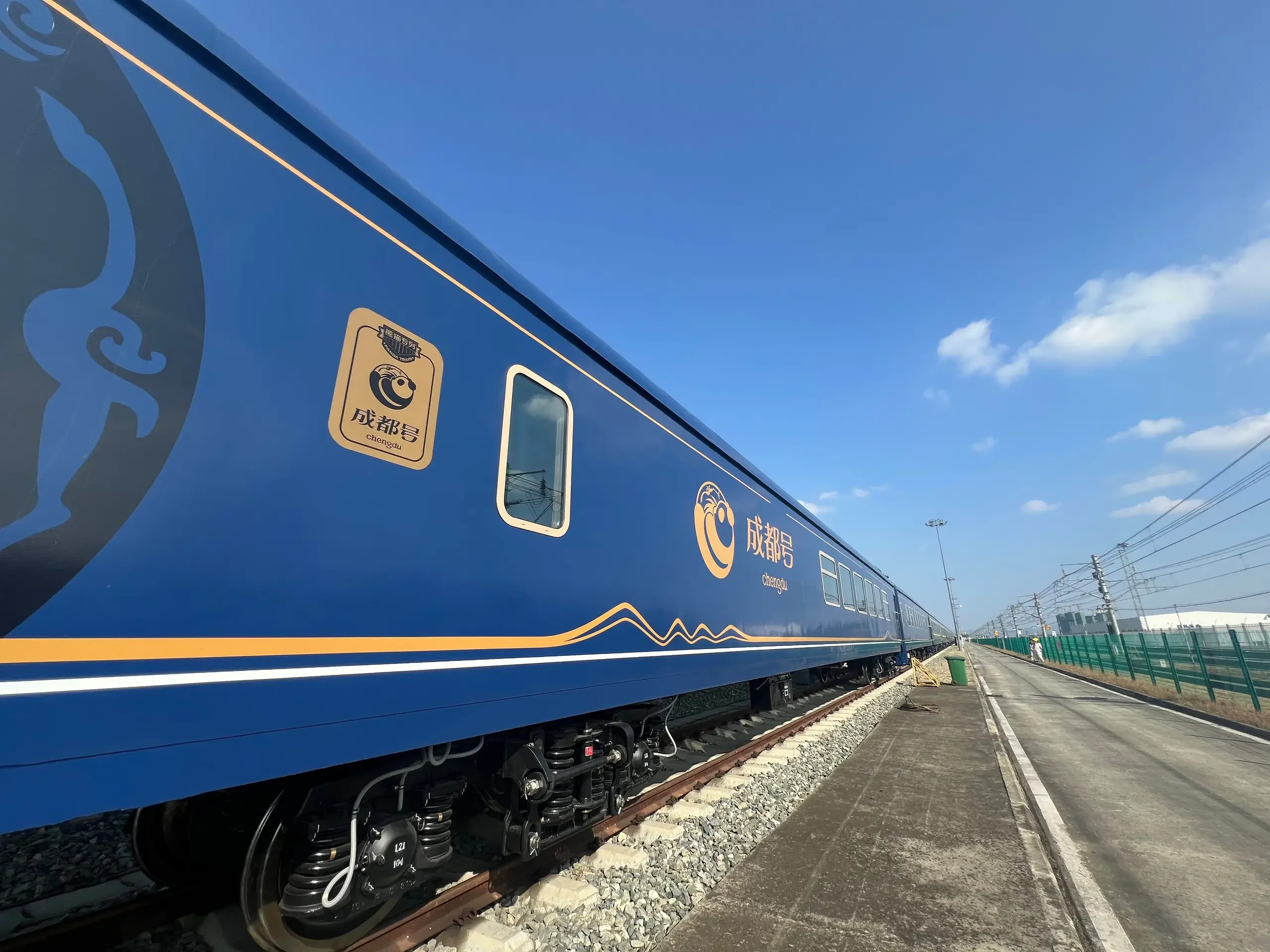
Designed for Chengdu Culture and Tourism, the Panda Train · Chengdu takes 'Rhythm of Mountains and Rivers' as its design theme, integrating Sichuan landscape imagery into the train livery and signage system. This is not about putting a panda graphic on the train body—it abstracts Sichuan's topographic features (the undulating relationship between basin and mountains) into rhythmic changes in the body lines, replacing figurative symbols with design language. As the train moves on the track, the visual flow of the livery overlays with the physical motion, producing a 'moving landscape painting' effect.
Public transport livery design has a hidden constraint: close viewing (waiting on a platform) and distant viewing (moving between city buildings) require different visual scales. The Panda Train's layered design logic—large-scale mountain silhouettes for distant recognition, small-scale detail textures for close-up quality—keeps visual communication effective at different distances.
The 12th World Games Torch 'Rongyao'—A Symbol of City Spirit
The 12th World Games Torch 'Rongyao'—Symbolizing City Spirit
World Games torch design is one of the most difficult categories in urban public design—it must carry the spirit of the event, city culture, and manufacturing feasibility within an extremely small volume. The Rongyao torch takes 'hibiscus blooming' as its core image, deconstructing the petal form of Chengdu's city flower, the hibiscus, into the torch's flame shape. When lit, the flame emerges through the petal structure, creating a visual narrative of 'flower blooming to reveal fire.'
Torch design has another practical constraint: it must be carried while running by athletes and remain visually recognizable in front of global media cameras. This means weight control, grip ergonomics, and long-distance visual impact must all be satisfied at the same time.
Chengdu Rail 500 km Souvenir—Materializing City Memory
Chengdu Rail 500 km Souvenir—Materializing City Memory
In 2020, Chengdu Rail Transit exceeded 500 km. IDING DESIGN's commemorative desk lamp for Chengdu Metro uses a Bluetooth speaker to express 'light and shadow tunnel' and a rotating lantern form to express 'lamp of dreams.' The design logic of this product group is to use everyday objects to carry the narrative of a city milestone. The lamp is not a commemorative plaque, but it has more warmth than a plaque—because it enters users' daily lives.
China Railway Ludao Art City—'Eastern Sentiment, Western Charm' in Public Wayfinding
China Railway Ludao Art City—'Eastern Sentiment, Western Charm' in Public Wayfinding
At the Chengdu landmark project China Railway Ludao Art City, IDING DESIGN was responsible for all public wayfinding and facility design. The core design strategy is 'honesty of materials'—using the textures of natural materials (stone, perforated steel plate) to express quality rather than film or spray paint simulations. The natural texture of polished marble presents a warm, jade-like quality, while the flying petals of perforated steel plate produce dreamlike tones under lighting. The 'ethereal feel' of Chinese architecture is achieved through hidden light source frames: the light source itself is invisible, and only the effect of light remains in the space.
5G Smart Streetlight—The 'De-infrastructuring' of Infrastructure
5G Smart Streetlight—The 'De-infrastructuring' of Infrastructure
Designed for Sichuan Energy Investment, the Shengshi Fenghua series of 5G communication photoelectric equipment integrates a communication base station, smart lighting, and city streetlight into one form. The key to the design is not 'what to add' but 'what to hide'—the antennas and modules of the communication equipment are integrated into the pole structure, so visually it is simply a streetlight. This 'de-infrastructuring' design thinking points toward urban public design moving from function stacking to spatial integration.
Trends
Trends: The 'Soft Power' Shift in Public Design
Urban competition is shifting from 'who builds higher' to 'who thinks in more detail.' Xiongan New Area, Chengdu Park City, and Yangtze River Delta integration—the core keyword of the new round of urban development is 'quality,' not 'scale.' Public design is no longer an auxiliary part of municipal engineering, but the visual front end of city brand strategy. Design capability that can simultaneously understand urban planning logic, manufacturing process constraints, and cultural symbol expression will become a scarce resource in this shift.
The Standard for Urban Public Design Is Not 'Does It Look Good'
The Standard for Urban Public Design Is Not 'Does It Look Good,' But Whether Ten Years Later, When This Lamp, This...
The standard for urban public design is not 'does it look good,' but whether, ten years later, when this lamp, this train, and this torch have become part of citizens' daily memories, they will feel it 'should have always looked this way.'
View IDING DESIGN's full project portfolio | Book a design assessment