Three Scenario Rules for Robot Design
Three Scenario Rules for Robot Design
Rule one: onlookers determine visual warmth. For robots working in passengers’ line of sight, the appearance must remove any sense of aggression—rounded corners, soft colors, controlled massing. For robots working in unmanned workshops, the first priority is structural maintainability and cooling efficiency; the appearance can be “bare.”
Rule two: maintainability is competitiveness. Industrial robots are not consumer electronics—they cannot simply be “sent back to the factory when broken.” Modular design, quick-release structures, and easily replaceable consumable units directly affect the customer’s full lifecycle cost. The inspection robot’s quick-swap battery structure and AMR’s modular deployment solution essentially design operations and maintenance costs into the product structure.
Rule three: interaction mode determines form. Screen-equipped and screenless robots follow completely different form logics. With a screen, its position, angle, and anti-glare treatment determine the overall massing relationship; without a screen, a robot’s “expression” can only be conveyed through lighting, movement, and silhouette. The Intel service robot’s blinking “cute eyes” interaction and Xiaoling Tongxue’s folding touchscreen are both cases of interaction logic driving form design.
AMR Aviation Logistics Robot—When Robots Work Beside Passengers
AMR Aviation Logistics Robot—When Robots Work Beside Passengers
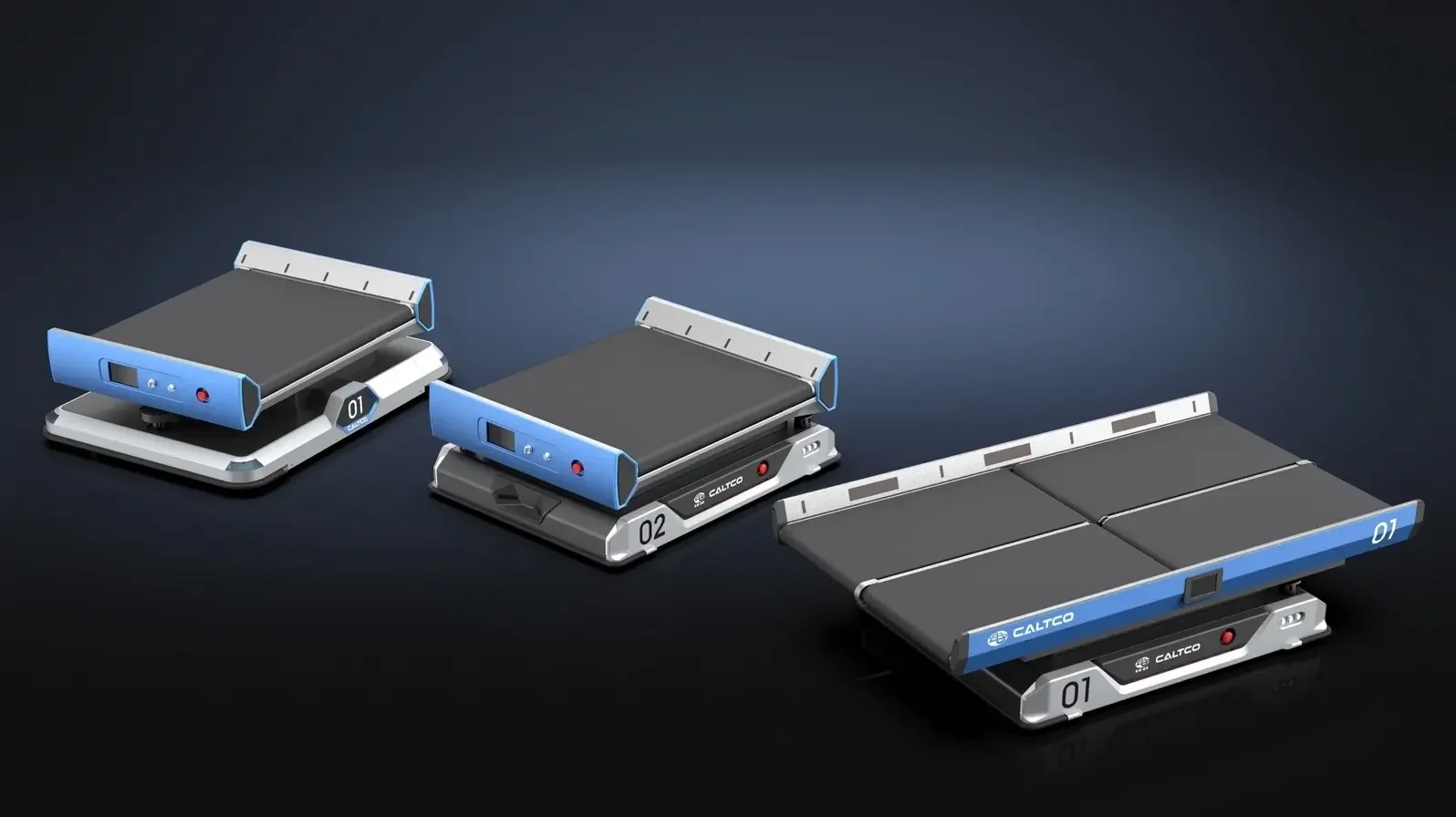
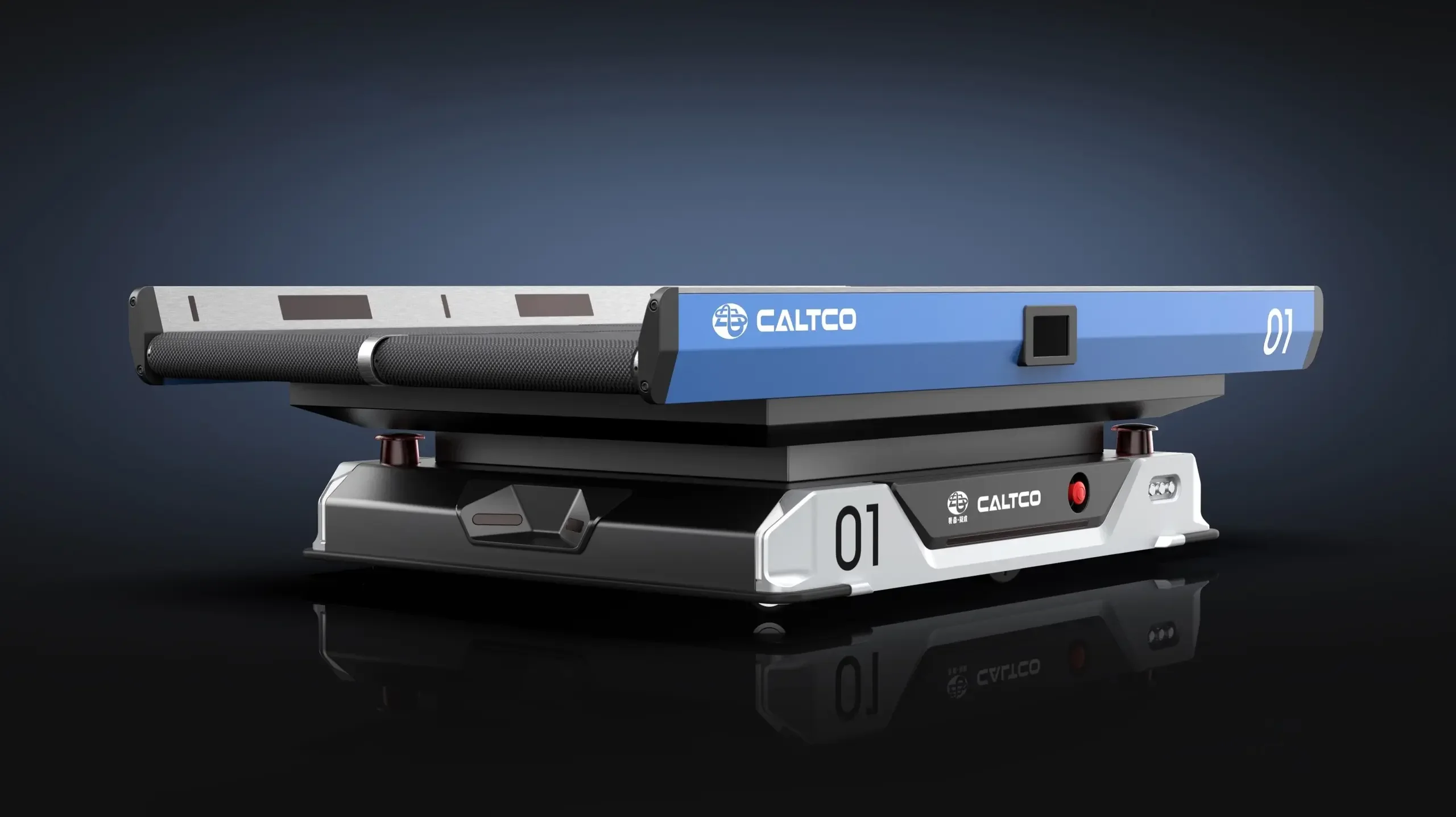
The AMR aviation logistics robot designed for China’s civil aviation won an iF Product Design Award. The core design challenge was not “how to move luggage,” but “how to move luggage with dignity in passengers’ line of sight.” The blue-silver color-blocking scheme maintains visual approachability in public spaces; the modular structure eliminates airport infrastructure modifications; 12-hour battery life and ±5 mm positioning accuracy upgrade luggage handling from manual to autonomous dispatch. The rounded corners are not for looks—they reduce collision risk in crowded environments.
Intel Service Robot—A “Family-Like” Design Language
Intel Service Robot—A “Family-Like” Design Language
The new service robot designed for Intel features a RealSense 3D camera and NUC computer, enabling autonomous navigation, voice control, and remote video. The core design proposition is “de-tooling”—it should not look like a walking electronic device, but like a family member. The neck uses soft rubber material to prevent pinched fingers; the slightly plump form, paired with blinking “eyes,” conveys approachability. This choice of design language comes from scenario definition: it is not an industrial tool, but a companion living alongside people.
Exoskeleton Series—Kinematics Is the Design Language
Exoskeleton Series—Kinematics Is the Design Language
The Fushanshou lower-limb exoskeleton and the lower-limb rehabilitation exoskeleton developed with the University of Electronic Science and Technology of China represent the extreme of “function is form” in robot design. The exoskeleton’s motion joints must precisely match the mechanical curves of natural human gait, leaving almost zero room for “styling”—every visible line is the result of kinematic calculation. A six-bar linkage mechanism achieves a 1:6 load-bearing ratio, and within the overall weight constraint it fits 90% of adult male body types. Here, the role of Industrial Design is not “stylist” but “translator”—translating kinematic data and ergonomic parameters into manufacturable geometric structures.
Xiaoling Tongxue—Interaction Design for a Remote Avatar
Xiaoling Tongxue—Interaction Design for a Remote Avatar
The remote avatar robot designed for DeepGlint enables remote audio/video interaction in scenarios such as supermarket retail, security, and remote office. Its innovative “point-to” function combines LiDAR autonomous navigation with a dual-microphone 5-meter pickup array, giving remote operators a communication experience close to being on site. The robot’s folding screen structure, camera field of view, and pacing of travel speed—these interaction parameters directly affect users’ sense of “remote presence.”
The Next Stage of Robot Design
The Next Stage of Robot Design: Form Differentiation Will Come from Depth of Scenario Understanding.…
In the next stage of robot design, form differentiation will come from depth of scenario understanding. Designing a robot that “looks like it belongs in that scenario” requires not styling ability, but an understanding of the three-way relationship among people, objects, and space in the scenario. “A robot that looks like a robot” is not praise—“a robot that looks like the place it should be in” is what makes good robot Industrial Design.
Robots Are Not Designed in a Vacuum
Robots Are Not Designed in a Vacuum; They “Grow” from Scenarios.…
Robots are not designed in a vacuum; they “grow” from scenarios. When choosing a robot design company, see whether they have asked: Where does this robot work? Who is watching it? Who repairs it? If they cannot answer these three questions, no matter how good the rendering is, it is still just a model.
View IDING’s Full Case Library | Book a Design Assessment