A repeatedly proven fact
A repeatedly proven fact: pure cosmetic renderings cannot solve production problems. In high-barrier fields such as industrial equipment, medical devices, and consumer electronics, what determines whether a design can reach production is never how good the render looks.
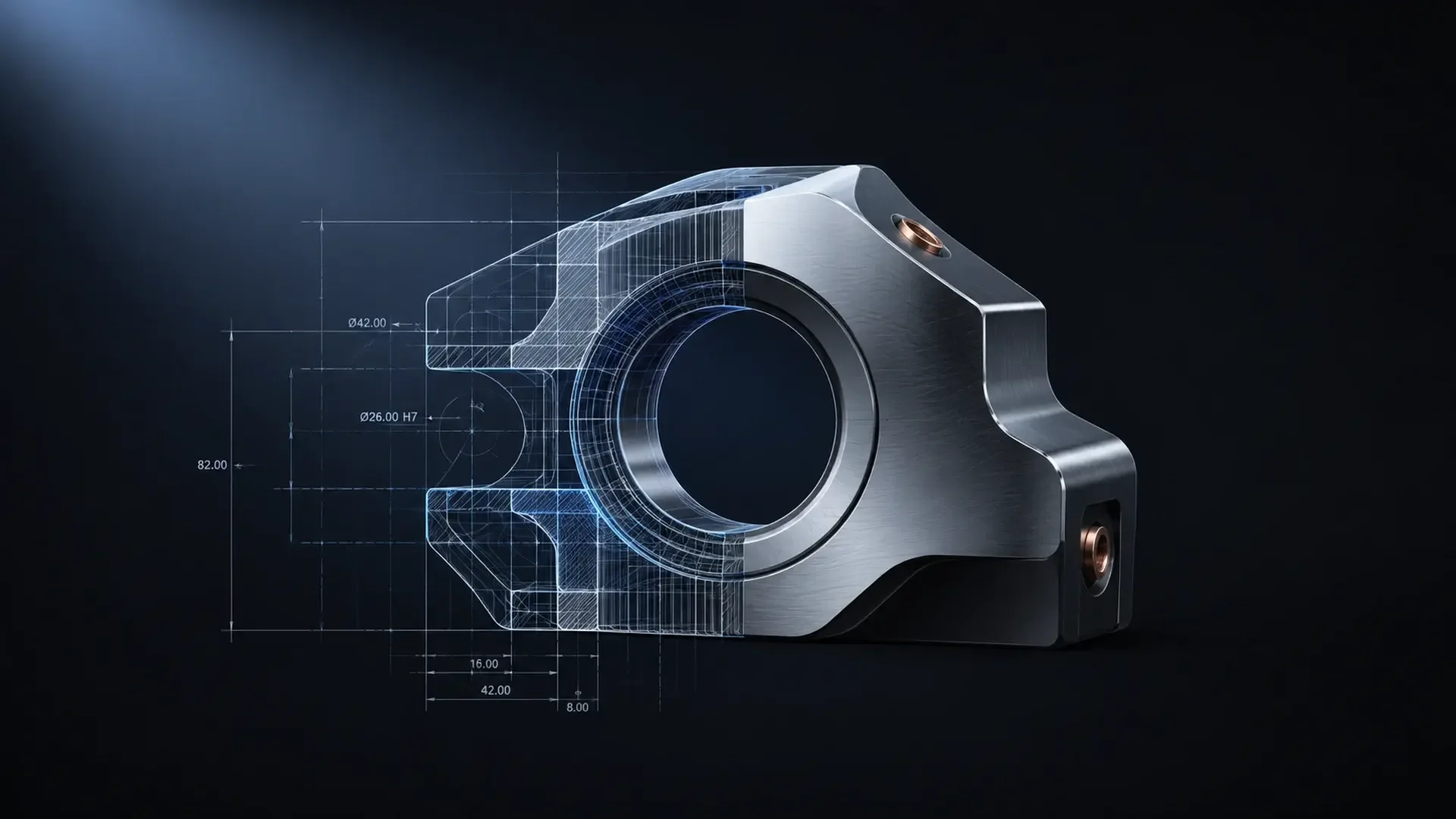
IDING DESIGN has practiced Industrial Design for 19 years, and the deepest lesson is this: help you get the product right. Getting it right is not about drawing it right; it is about working backward from engineering constraints to define the design, so every deliverable can be directly converted into production drawings.
Appearance and Engineering
Appearance and engineering should not be a relay between two teams.
In the traditional process, designers hand over renderings, and engineers then revise the structure. Appearance and engineering are like a relay race, with substantial information lost at handoff. Downstream teams discover insufficient draft angles, uneven wall thickness, or parting lines that affect appearance - these are the production killers in most design proposals. The problem is not that the design looks bad; it is that production was not considered during design.
IDING DESIGN's approach is to bring engineering constraints forward into the concept stage. Before drawing the first curve, we establish what material and process the part uses and how the mold will be built. Then we define appearance with those constraints in place, rather than drawing first and fixing later.
Three Physical Constraints
Three physical constraints determine the design ceiling.
Surface continuity. Rhino zebra analysis is not a checkpoint; it is a standard tool throughout the design process. A surface that looks smooth on screen is not necessarily moldable. The cost difference between G2 and G1 continuity must be clearly assessed at the concept stage.
Injection molding feasibility. Different materials have different shrinkage rates, and abrupt wall thickness changes cause stress concentration and sink marks. IDING DESIGN performs shrinkage prediction and wall thickness analysis at the design stage - not to pass drawing review, but to improve production yield.
Part breakdown and assembly logic. How many parts a product has, how it snaps together, how screws are hidden - these are not only the mechanical engineer's concern. Part breakdown logic determines visual integrity and serviceability, and it is a core decision in which industrial designers must participate.
The industry is moving in this direction
The industry is moving in this direction
Looking at recent design trends, engineering capability is becoming a true differentiator for design firms. According to Dezeen, stainless steel and aluminum product design is entering a new wave, focused on visual consistency of metal materials, durability, and modular structures that are easy to assemble and disassemble - all underpinned by a deep understanding of manufacturing processes and assembly logic.
Signify (Philips Lighting) demonstrated the commercial value of sustainable CMF selection with 8 Red Dot 2026 Product Design Awards, including myCreation Puzzle, which uses 50% recycled copolyester and 3D printing to connect material selection with manufacturing processes. From IKEA's tool-free assembly furniture to a foldable ultra-thin travel mouse, easy storage, low waste, and high adaptability are becoming hard metrics - and each of these metrics points to engineering implementation capability.
Explore IDING DESIGN's full case studies: View Case Library | Book a Design Assessment: Contact Us