Medical device design has long had a hidden "culprit"
Medical device design has long had a hidden "culprit": overemphasizing an industrial sterile feel, yet forgetting…
Medical device design has long had a hidden "culprit": overemphasizing an industrial sterile feel while forgetting that the machine faces a human body with emotions, fears, and a need for reassurance. This article discusses a quietly emerging design direction—Empathetic Hardware: giving medical-grade devices human warmth, not at the expense of function, but in service of patients on an emotional level.
The Cost of Industrial Sterility
The Cost of Industrial Sterility: When Hardware Becomes a Source of Psychological Pressure
Data from international medical design research organizations shows that patients' psychological anxiety during medical monitoring directly interferes with the measurement stability of vital signs—heart rate and blood pressure can fluctuate by 15% to 25% in high-stress environments. In other words, devices that make patients feel afraid introduce bias into the measurements themselves.
This is a paradox long overlooked by engineers: medical devices pursuing precision actively create measurement error through their visual language.
Traditional medical hardware design philosophy comes from mid-20th-century operating room aesthetics: white, sharp angles, metallic finishes, and monochrome LED warning lights. This visual language made sense in the era of clinical efficiency, but as medical scenarios move toward home care, chronic disease management, and maternal and infant monitoring, this design language becomes an obstacle.
Core insight: designers face a structural opportunity—to unite medical-grade performance with consumer-electronics-level emotional experience at the level of hardware form. This is industrial design's next value dividend in the medical sector after "miniaturization."
Dimension One
Dimension One: Rounded Geometry—From "Operating Room" to "Home"
Form language is a product's most direct emotional symbol. Research shows that the human brain has an innate defensive response to sharp angles (sharp angle aversion), while rounded, organic contours form positive associations with safety and dependability. This is not an aesthetic preference; it is a neuroscience fact.
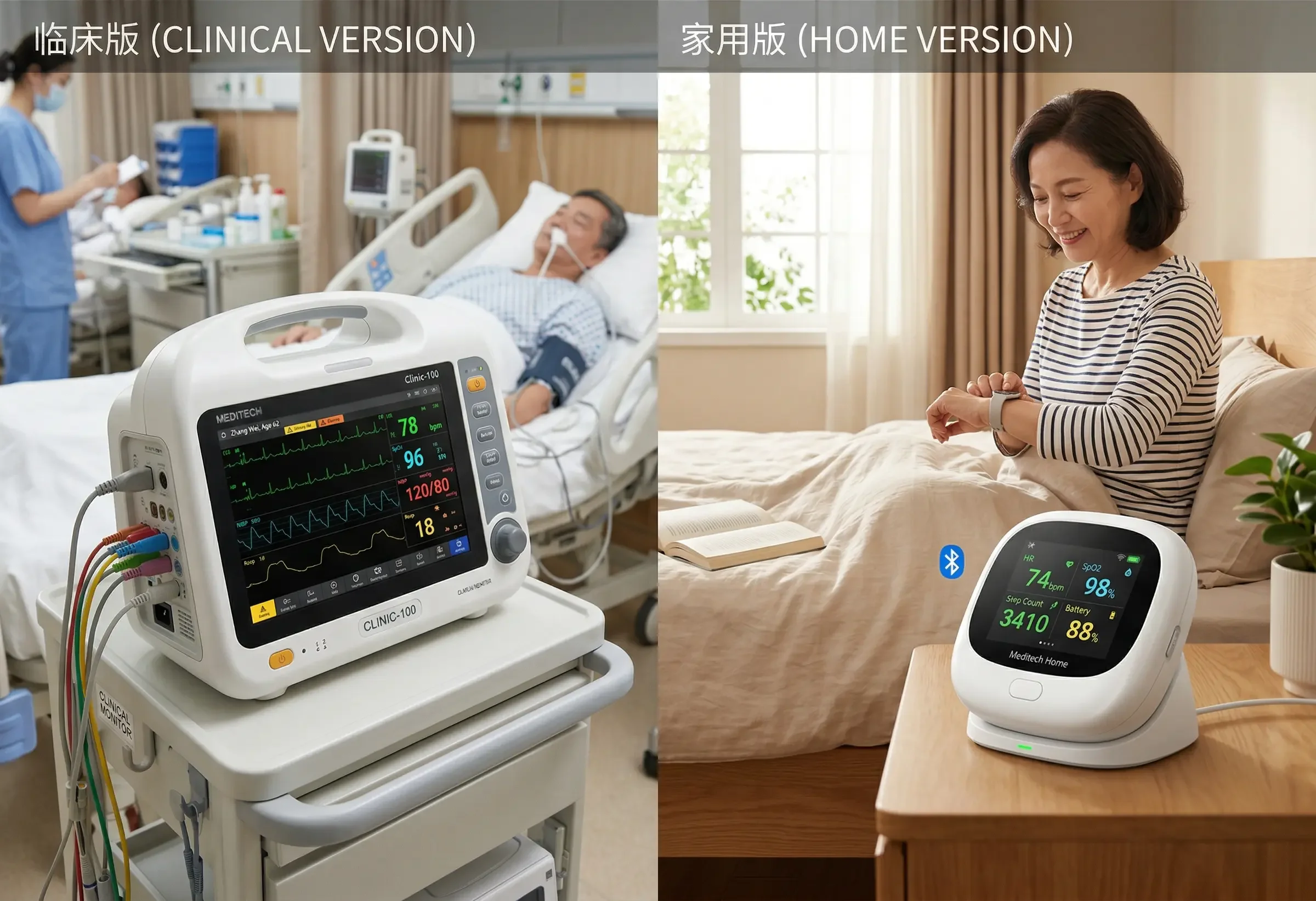
Today's leading home health devices—from Withings smart blood pressure monitors to Garmin blood oxygen monitoring wristbands—have completed a formal transition from an "instrument feel" to a "home object feel." Corner radii have increased, body proportions have become flatter, and colors have expanded from clinical white to warm beige and matte gray.
For vital signs monitors, rounded geometry means more than aesthetics: it changes the device's "presence" in the home—from an anxious reminder to a reassuring companion.
▲ Form comparison of rounded medical monitoring devices — clinical version vs. home version
Dimension Two
Dimension Two: Skin-Friendly Materials—Silicone, Textiles, and the "Dialogue" with Skin
Material is the most severely underestimated variable in emotional interaction. Medical devices have long relied on ABS hard shells combined with metal fittings, giving a tactile experience closer to a "tool" than a "wearable."
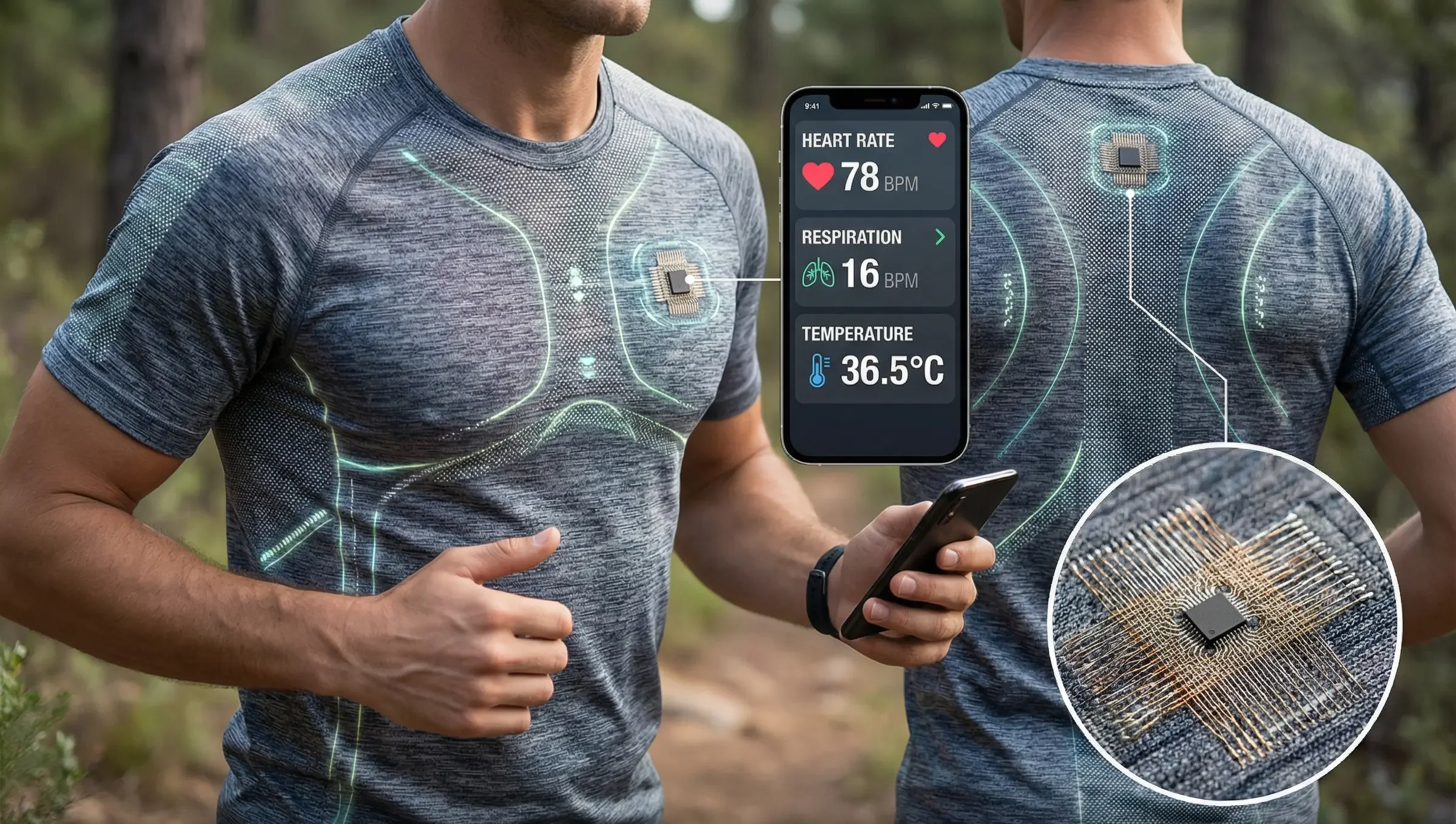
In 2025, SonoTextiles research published in Nature Electronics demonstrated that weaving glass microfiber acoustic sensors into a textile substrate can enable respiratory rate monitoring while maintaining garment-level comfort. Smart textiles are turning vital signs monitoring from a "device you attach" into a "skin extension you wear" (Source: Wang et al., Nature Electronics, 2025).
At the same time, the large-scale application of medical-grade liquid silicone rubber (LSR) is transforming the skin feel of contact sensors—ultra-soft silicone below Shore 20A hardness has a mechanical feel close to human adipose tissue, so long-term attached monitoring is no longer a psychological burden.
Textile sensors, soft silicone housings, magnetic detachable washable fabrics—behind these material choices is a shift in design philosophy toward a "second skin" rather than an "external device."
Dimension Two
Dimension Two: Skin-Friendly Materials—Silicone, Textiles, and the "Dialogue" with Skin: ▲ Smart Textile Vital Signs Monitoring — Sensors…
▲ Smart Textile Vital Signs Monitoring — Sensors woven into garment fibers (illustrative)
Dimension Three
Dimension Three: Gentle Interaction—Moving Beyond Red-Light Alarms, Embracing Gradual Feedback
Medical device interaction feedback design almost uniformly follows the logic of "abnormality equals alarm"—red lights, high-frequency beeps, vibration alerts. For chronic disease patients or postpartum mothers, this design language carries an extremely high psychological cost: every reminder is a stress response.
The "Calm Technology" concept offers an alternative: device information should be layered into a peripheral attention layer and a core attention layer. Only abnormalities that truly require intervention should trigger high-urgency alerts, while routine monitoring states should remain in the background of life with minimal sensory noise.
Specific design approaches include: ambient breathing light instead of status indicator lights; haptic vibration instead of beeping; gradient color instead of binary red/green judgments; and tone design for voice prompts (natural and gentle rather than mechanical warning sounds).
Key insight: Emotional Ergonomics is becoming the fourth dimension in design evaluation for medical hardware, alongside functionality, safety, and usability, and its weight continues to rise amid the shift toward home use.
Industry Opportunity
Industry Opportunity: The Market Logic of Healing-Oriented Devices
The global home medical device market surpassed US$60 billion in 2025 and is expected to maintain average annual growth of over 8% through 2030. Drivers include: essential chronic disease management in aging societies, health monitoring needs in families with newborns, and the continued rise in home healthcare awareness in the post-pandemic era.
In this market, empathetic hardware is not a premium option but a core differentiator. Consumers' decision-making when purchasing home monitoring devices is increasingly similar to consumer electronics: design appeal, comfort of use, and integration with the home environment are becoming key metrics alongside performance accuracy.
This means devices with medical-grade accuracy but a consumer-grade visual language will systematically replace purely industrial-looking previous-generation products over the next five years—whether in B2B (hospitals purchasing next-generation visualized ward devices) or B2C (personal health management scenarios).
Ultrasound Postpartum Rehabilitation Therapy Device
Ultrasound Postpartum Rehabilitation Therapy Device
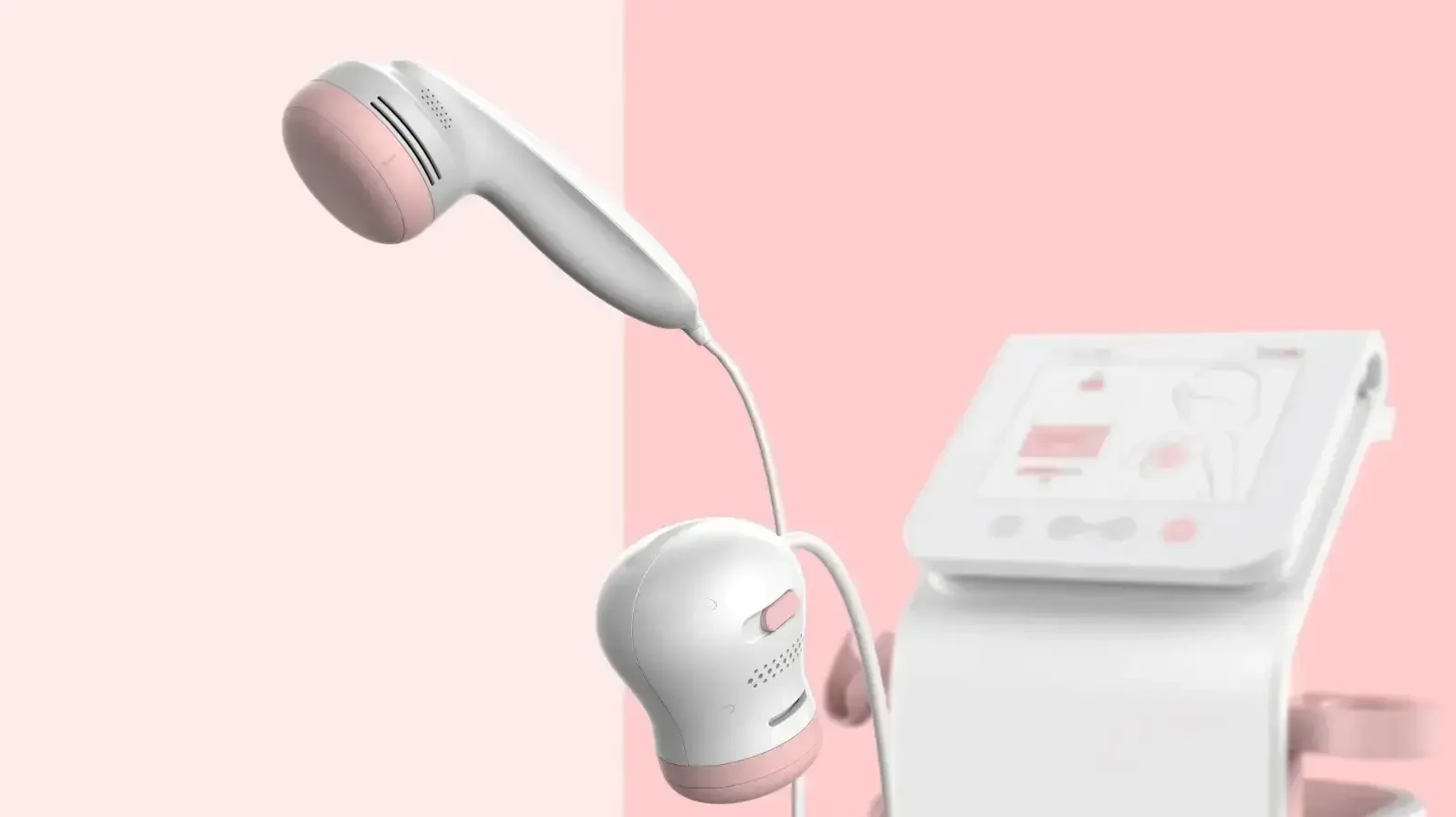
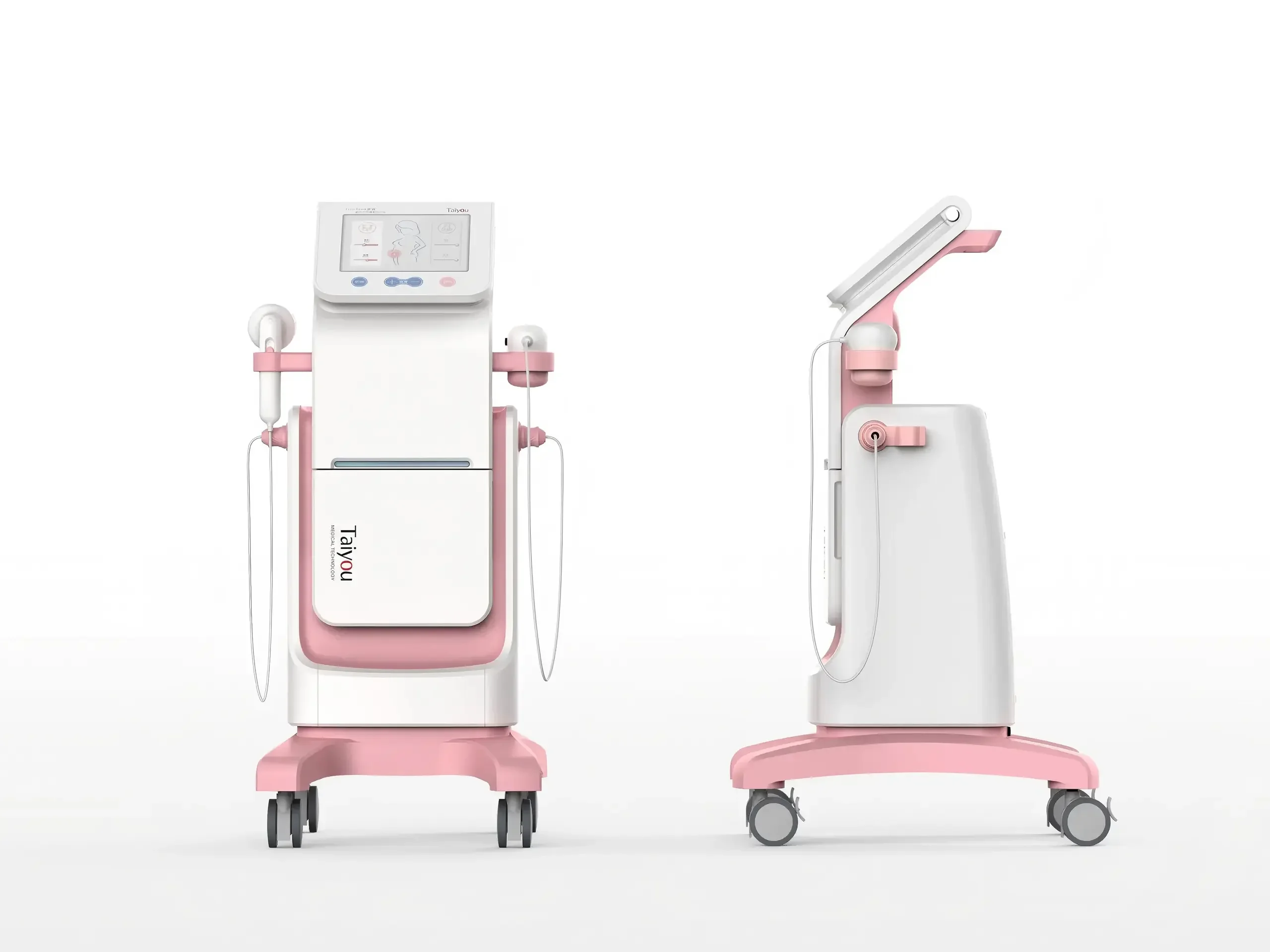
IDING DESIGN (iding.net) took on a design project for an ultrasound rehabilitation therapy device for postpartum maternal and infant departments and home settings. The device's technical core is a low-frequency ultrasound physiotherapy module, with precise functional positioning, but the first-generation hardware's visual language followed the industrial style of clinical ultrasound equipment—bulky and heavy, with a visually complex control panel, appearing rigid and psychologically oppressive in postpartum ward settings.
In preliminary design research, the IDING DESIGN team identified a key contradiction: postpartum users are in a fragile recovery period with high emotional sensitivity, and traditional device exteriors directly trigger resistance to use. The design team used "gentle strength" as the core of its formal language and advanced a "de-medicalization" redesign on three levels:
• Form layer: The main unit uses large-radius organic forms, with overall proportions tending toward vertical flatness and a lowered visual center of gravity, reducing the "machine feel" and approaching the silhouette language of home décor;
• Material layer: The treatment probe contact surface is covered in medical-grade soft silicone, with a skin-friendly tactile feel close to skin temperature; panel colors use warm off-white and soft matte finishes, avoiding the cold white palette of traditional medical equipment;
Ultrasound Postpartum Rehabilitation Therapy Device
Ultrasound Postpartum Rehabilitation Therapy Device: • Interaction layer: Status indication from high-contrast warning lights...
• Interaction layer: Status indication changed from high-contrast warning lights to soft ambient light gradients, and the operating logic was simplified to a three-step process that can be completed with one hand, reducing the cognitive burden of first-time use.
The design outcome not only met IEC 60601 medical device safety standard requirements, but user testing also showed that under the same treatment parameters, the redesigned version significantly improved users' willingness to actively cooperate with treatment, with a notable decrease in anxiety scale scores. This is a concrete case of "empathetic design" producing quantifiable clinical value.
▲ IDING DESIGN · Ultrasound Postpartum Rehabilitation Therapy Device — Rounded form and skin-friendly material design details
Positive Pressure Air-Supplied Respiratory Protection System (iF + Red Dot Dual Awards)
Positive Pressure Air-Supplied Respiratory Protection System (iF + Red Dot Dual Awards)
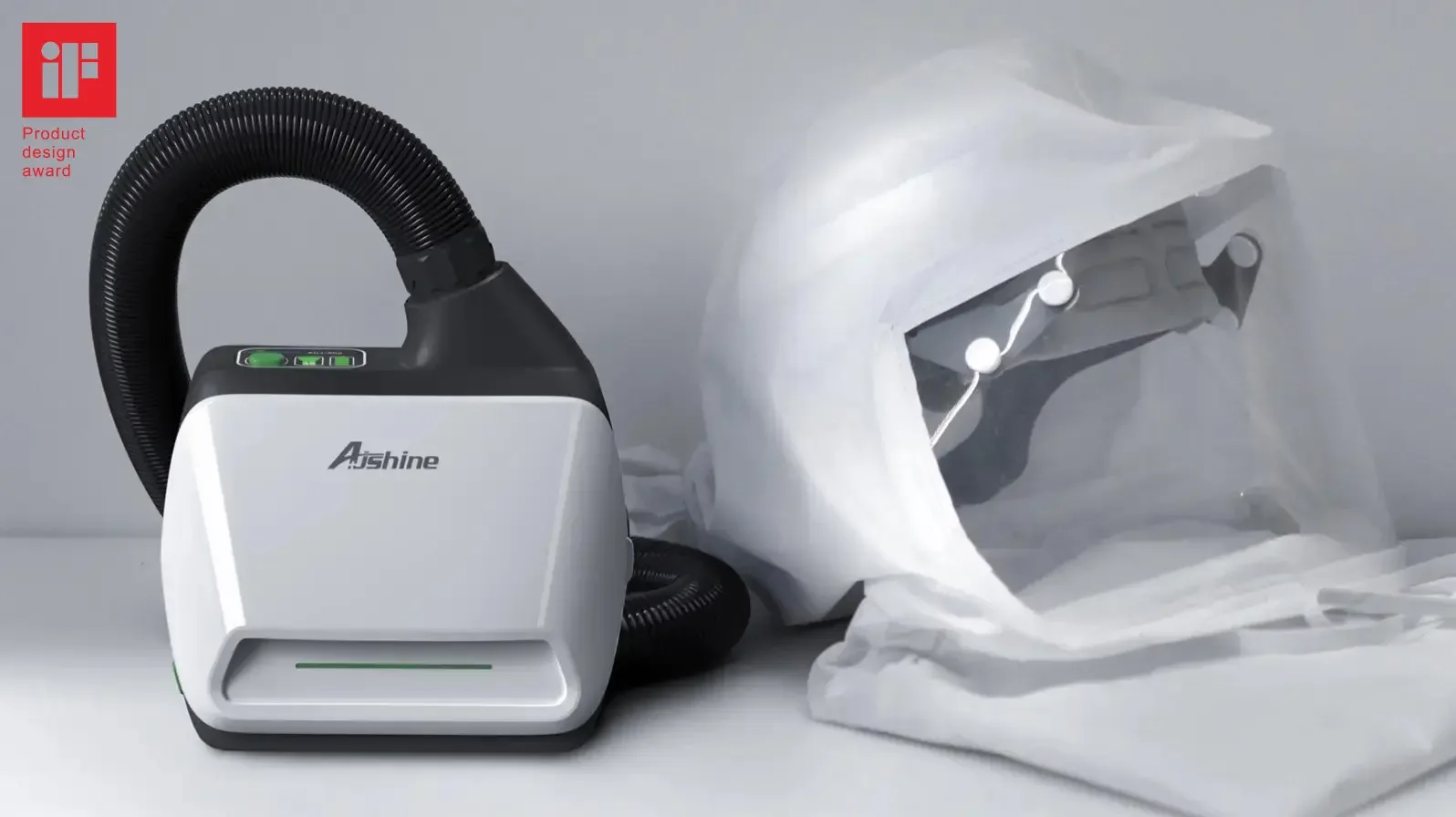
In the design of a positive pressure air-supplied respiratory protection system for healthcare workers, IDING DESIGN also applied the principles of Emotional Ergonomics: while ensuring the sealing performance of positive pressure air supply, it significantly reduced fatigue and psychological pressure during extended wear through an ergonomic head-conforming structure, soft face-contact liner, and lightweight housing. The product won both the German iF Design Award and the Red Dot Design Award, validating the coexistence of functionality and emotional design. More cases: https://iding.net/cases
▲ IDING DESIGN · Positive Pressure Air-Supplied Respiratory Protection System — Lightweight design reduces wearing fatigue
Three Decision Questions for Product Leaders
Three Decision Questions for Product Leaders
When introducing empathetic design into medical hardware projects, test the following three judgments at the concept stage:
• Are your target users "treating illness" or "living"? — Users in home chronic disease care, maternal and infant monitoring, and elder health management have psychological expectations closer to consumer electronics than clinical tools, so the design language should be adjusted accordingly.
• What proportion of use time is the device's "silent time"? — If the device is in standby monitoring most of the time (such as 24-hour ECG monitoring), its environmental integration and visual noise level are more important than the operating interface.
• Does the patient's stress state affect data accuracy? — For indicators such as blood pressure and heart rate, the user's emotional state directly affects measurement results. "Calming the user" is itself a functional design goal, not a nice-to-have.
Three Decision Questions for Product Leaders
Three Decision Questions for Product Leaders: The answers to these three questions will determine whether your product...
The answers to these three questions will determine whether your product needs a "de-medicalization" design restructure, and at which dimension to prioritize design resources.
Book a Design Feasibility Assessment
Book a Design Feasibility Assessment
IDING DESIGN provides an online design feasibility assessment of no more than 60 minutes. The assessment covers:
Product definition and user scenario confirmation · Key engineering constraint identification · Initial recommendations for design strategy and milestones
To book, contact: https://iding.net/contact
View the complete case library: https://iding.net/cases
References
References
Wang, Y., Sun, C. & Ahmed, D. A smart acoustic textile for health monitoring. Nature Electronics 8, 485–495 (2025).
AAMI Human Factors Engineering Committee. ANSI/AAMI HE75:2025 — Human Factors Engineering Design of Medical Devices. AAMI, 2025.
Toh Ka Peng. "Good healthcare design begins with empathy, not equipment." Malay Mail, February 12, 2026.
PMC / MDPI. Smart and Sustainable: A Global Review of Smart Textiles, IoT Integration, and Human-Centric Design. Sensors, 2025.
References
References: ScienceDirect. Nex…
ScienceDirect. Next-generation wearable ECG systems: Soft materials, AI integration, and personalized healthcare applications. Chemical Engineering Journal, 2025.
European Medical Device Summit 2026 — Advancing human-centric design informed by behavioral insights. emdsummit.com.
Healthcare case library on the IDING DESIGN website:
https://iding.net/cases?industry=%E5%8C%BB%E7%96%97%E4%B8%8E%E5%81%A5%E5%BA%B7