Autumn 2026 Observation
Where Algorithmic Inflation Meets Material Authenticity
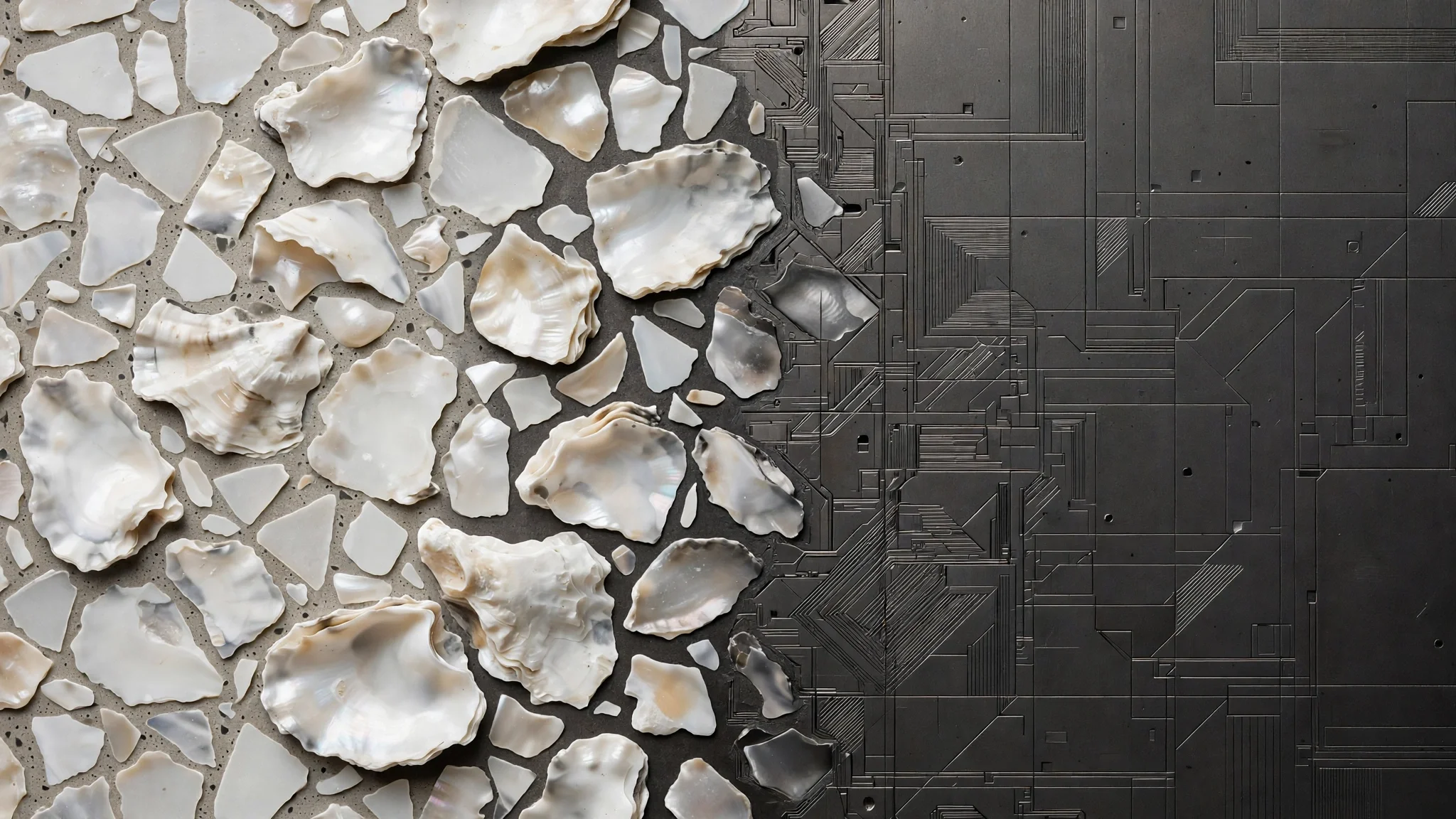
In autumn 2026, two currents meet in industrial design. On one side is the “extreme inflation of digital ideas”: long-horizon AI agents such as Claude Opus 5.5 and GPT-6 Sol / Luna have cut reasoning costs by 40%–50%, pushing the marginal cost of concept generation and rendering toward zero. On the other, the Dezeen Awards 2026 shortlist and the London Design Festival show leading designers turning together toward material authenticity and circular reuse, from Yves Béhar’s frontier hardware to Pearson Lloyd’s modular “Hug” concept and Besley & Spresser’s oyster-shell terrazzo architecture.
When AI can mass-produce concepts and sustainability narratives, the real test returns to the factory: how can circular materials, irregular structures and pioneering CMF come off the line without sacrificing yield? With 19 years of end-to-end engineering delivery, IDING DESIGN uses this article to show how “full-chain engineering visibility” bridges that gap.
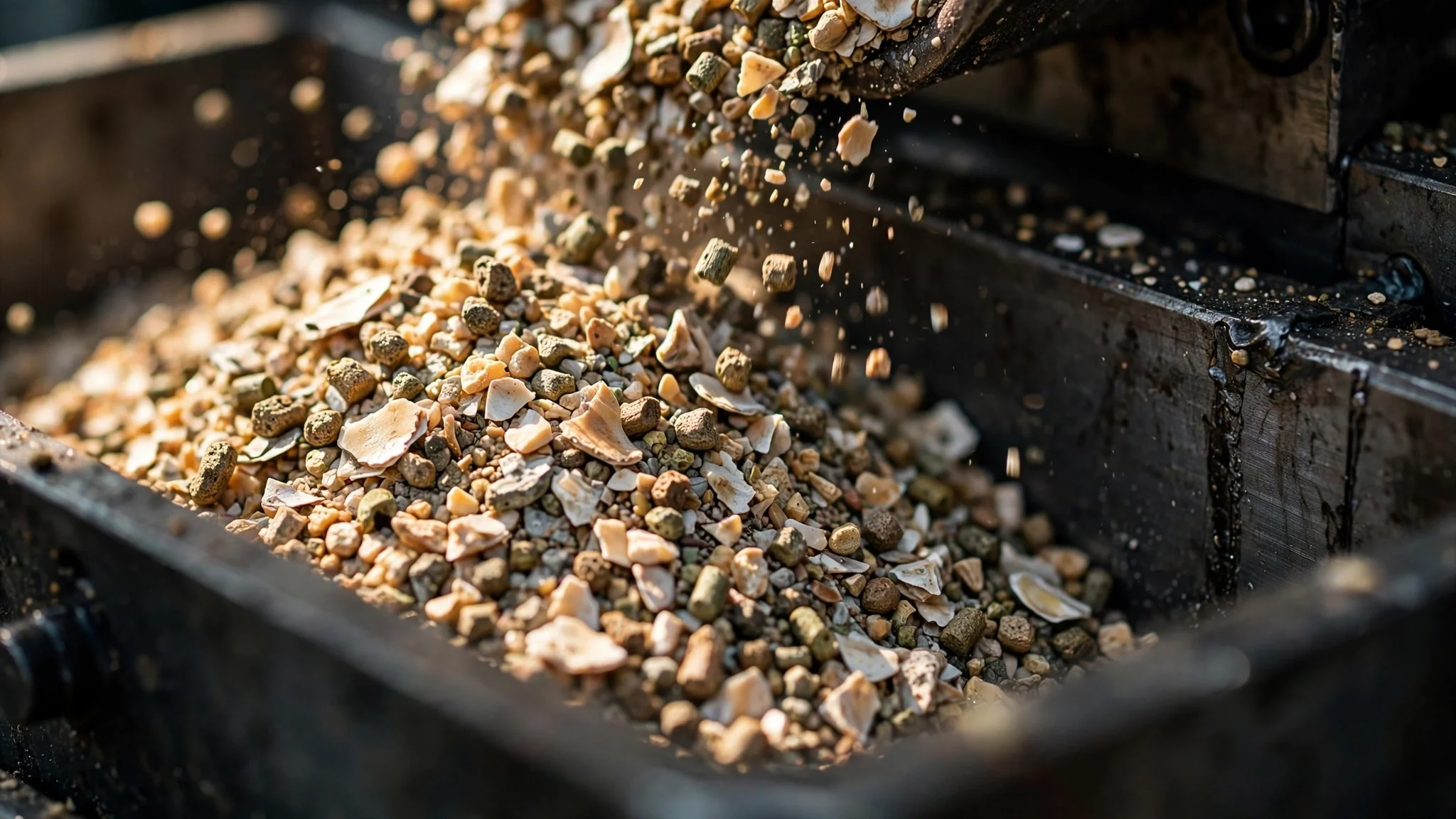
Shrinkage Drift
How Natural Fillers Disturb Crystallization
Conventional ABS and PC/ABS hold shrinkage steady at 0.4%–0.6%, so mold scaling is enough to keep accuracy. With 20%–40% oyster-shell powder, wood fiber or recycled granules, impurities become heterogeneous nucleation sites, cooling produces severe anisotropic shrinkage, and large shells warp and show misaligned seams.
IDING DESIGN does not rely on a single empirical shrinkage value: we require 3D mold-flow simulation combined with the supplier’s real rheology data, use graded wall thickness on large shells, and reserve 0.3–0.5 mm micro-deformation compensation grooves at the lip.
Weld Lines
The Brittle-Fracture Trap of Weld Lines and the “Skeleton and Skin” Split
At a weld line, pure resin molecular chains can re-entangle by thermal diffusion and recover more than 80% of their strength; circular impurities lying across the merging flow front block fusion, so in 1 m drop tests the housing often cracks brittlely along the weld line.
The “skeleton and skin” countermeasure: an internal UL94-rated engineering-plastic skeleton carries the load, an external 2K/IMD layer provides the eco-friendly surface feel, and hot-runner timing control drives weld lines into non-load-bearing blind zones.
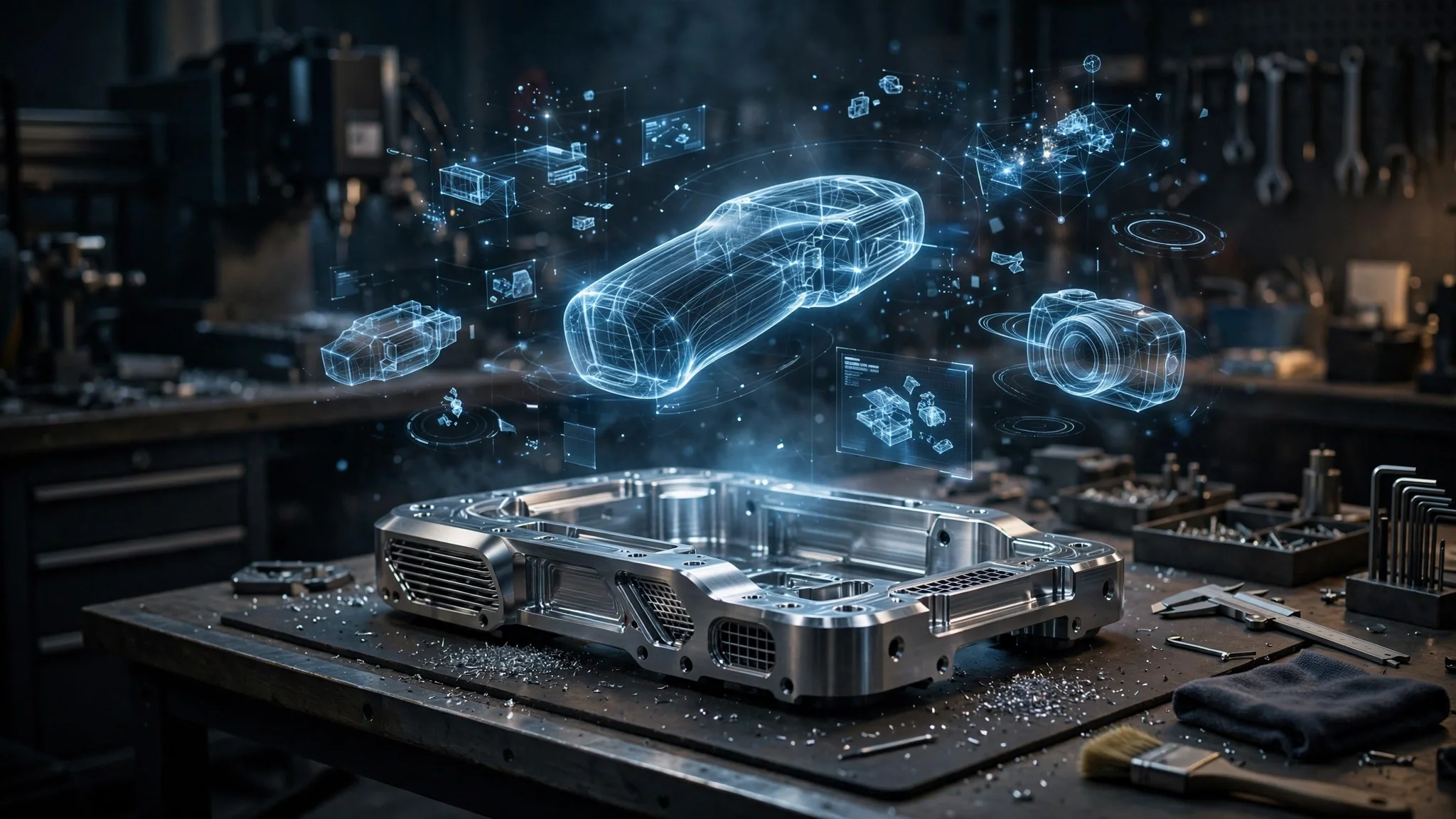
Blind Spot
The Physical Reality AI Cannot Sense
AI is good at symbols and image semantics but lacks deep knowledge of the manufacturing floor: it cannot sense the microscopic mold deformation under 150 tonnes of clamping force, cannot assess the ergonomic radius of a finger threading a wire harness, and cannot bear the financial responsibility for an RMB 300,000 mold scrapped over draft angles or sink defects.
AI’s blind spot is exactly the physical laws that cannot be compromised.
Engineering Position
Helping You Get the Product Right
IDING DESIGN treats AI as a lever for inspiration and anchors its deliverables in “certainty of physical implementation”: fully industrial-grade parametric CAD solids (STEP/IGES) with no thickness-free polygon meshes; every drawing marks the parting line, ejector-pin clearance, 0.5T rib chamfers and GD&T tolerance zones; and upfront review saves companies months of mold trials and avoids mold costs of hundreds of thousands of RMB.
Breakthrough
Carrying Frontier Aesthetics with Hard Manufacturing
What is truly impressive in Dezeen 2026 is not conceptual spectacle but mature design in which modular disassembly, repairability and material quality are built into the skeleton.
The value of industrial design lies not in the number of renderings but in thousands upon thousands of products leaving the line at very high yield. IDING DESIGN will keep its 19-year engineering foundation and use production drawings to help you get your product right.
FAQ
Four Key Questions on Circular Materials, AI and Mass Production
Key questions on circular materials, AI and mass production.
What are the core difficulties of mass-producing bio-circular materials?
Distorted rheology: shrinkage swings from a stable 0.5% to 0.3%–1.2%, so large shells warp; impurities block molecular-chain entanglement and cut weld-line toughness by 40%–60%; residual moisture causes flow marks and silver streaks.
Where does an industrial design company add value when AI is everywhere?
AI drives concept and rendering costs close to zero and also multiplies concepts that cannot be manufactured. A design company’s irreplaceable value is to turn AI ideas into engineered solids that satisfy demolding, flow and assembly envelopes, manage tolerance stack-up across parts, and deliver production drawings that can be milled directly, avoiding trial-and-error costs of hundreds of thousands of RMB.
Why do award-winning eco concepts struggle to reach mass production?
Trade-show samples can use hand-cast molds or 3D printing and ignore draft angles, cooling-channel efficiency and cycle time; mass production faces 30–60 second molding cycles, -40°C to 70°C thermal shock and a 98% yield line, and without upfront engineering validation it will fail.
How does IDING DESIGN ensure zero rework at tooling?
A three-stage loop: before tooling, run mold-flow simulation with material suppliers to set gates and vents; decouple the load-bearing skeleton from the CMF appearance layer; and deliver STEP solids with a full feature tree, draft angles and 2D GD&T annotations so the mold shop can machine them without further revisions.
Get Your Next Product Right
Working on a circular-material product, or developing hardware with AI assistance? Let’s talk. With 19 years of production engineering experience, we help you get the drawings right the first time.